Why Your Ponytail Gives You a Headache Halfway Through a Workout
Quick Answer: Sustained traction on the scalp irritates the nerves supplying the scalp and the tissue around them, and the effect is cumulative — hence fine at minute five, painful at minute 30. Sweat adds weight, movement adds repeated tugging, and a high tight ponytail concentrates all of it on a small area. Lower, looser, and retied halfway through solves most cases.
You tie it up, it feels secure, you start training.
Twenty-five minutes later there is a band of dull ache across the top of your head and you cannot work out when it arrived.
This has a name in the headache literature and a genuinely simple mechanical explanation, which is a relief given how often it is dismissed as nothing.
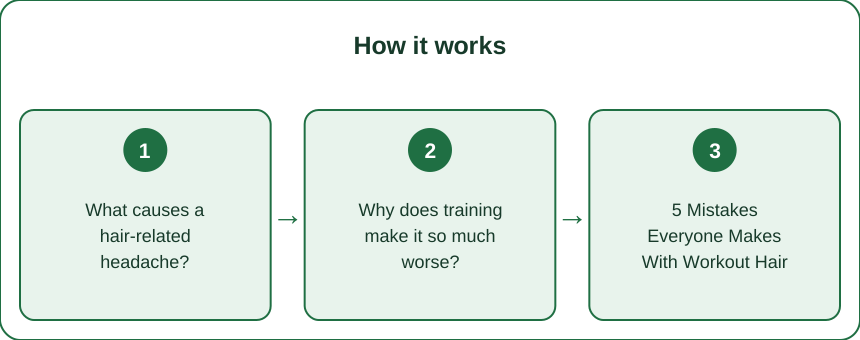
What causes a hair-related headache?
Traction on the scalp, sustained over time.
The scalp is densely innervated, and pulling on hair transmits force to the tissue those nerves sit in. External-pressure and traction headaches are recognised headache types — the International Headache Society classifies headache attributed to external traction as a distinct entity, and the description matches this exactly: pain in the area of traction, developing during the traction, resolving within an hour of removing it.
Two features explain why it is so easy to misidentify. First, it is cumulative rather than immediate — the tie feels fine when you put it in, so people do not connect the two. Second, the pain is often felt away from the ponytail itself, across the top or front of the head, because the affected nerves supply a wider area than the point of pull.
There is a further factor for people who get migraines: cutaneous allodynia, where ordinary touch on the scalp becomes painful, is common during and around migraine attacks. If a tie that is normally comfortable suddenly hurts, that can be an early signal rather than a hair problem.
Workouts make all of it worse for reasons that have nothing to do with hair biology.
Why does training make it so much worse?
Four things stack up.
Sweat adds weight. Wet hair is significantly heavier than dry hair, and that weight hangs off the same small anchor point. A ponytail that was well balanced at the start is a heavier lever by minute 20.
Movement adds repeated micro-tugging. Every stride, jump and rep pulls the mass of hair down and lets it spring back. Static traction is one thing; thousands of small repeated tugs is a different load entirely.
Head position changes the geometry. A high ponytail sits directly in the path of anything that touches the back of the head — a bench, a mat, a headrest — and lying on it forces the base sideways.
Neck muscle tension contributes. Sessions involving overhead work, cycling posture or a lot of screen-neck beforehand leave the suboccipital muscles tight, and tension there produces a very similar band-like ache. Sometimes the ponytail is the trigger on top of an already-loaded neck rather than the whole cause.
Seasonally, add hats. As the weather cools, a beanie or headband over a tight tie doubles the pressure, and people often start getting this in September having never had it in July.
5 Mistakes Everyone Makes With Workout Hair
1. Tying it in the same spot every session. The single biggest one. Constant traction in one place is also the classic mechanism behind traction alopecia, particularly along the hairline and temples, and that is a slow, quiet form of damage that people notice years late. Rotate the position.
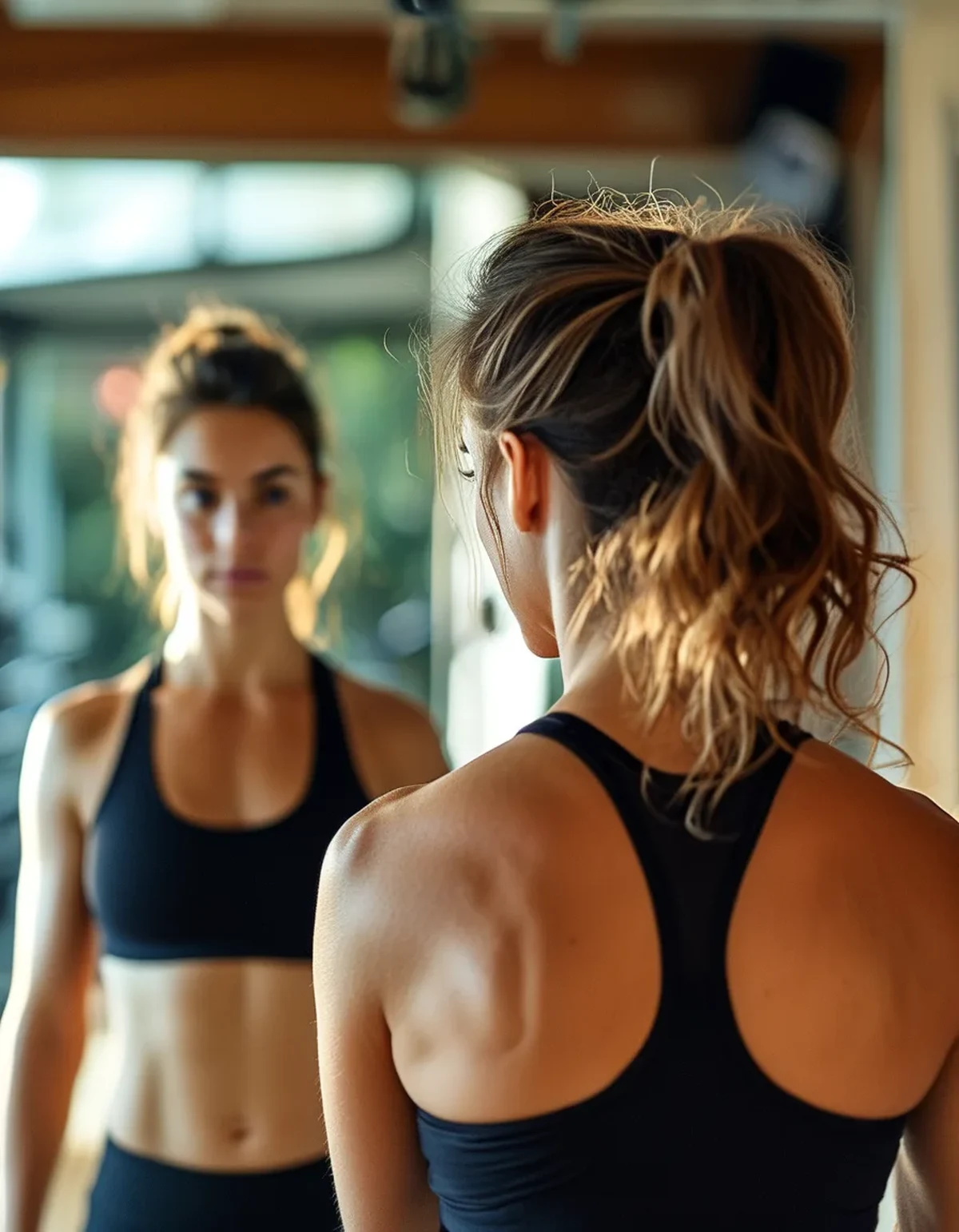
2. Going high and tight because it feels secure. High and tight concentrates force on the smallest possible area. A low ponytail or a loose braid at the nape holds just as well for most activities and spreads the load.
3. Wet hair up. Hair is at its most fragile and heaviest when wet, and tying it tight while wet is the worst combination for both headache and breakage.
4. Using thin elastics with metal joins. Thin bands cut into a small area and metal parts snag. A wider fabric-covered band distributes pressure over more scalp for exactly the same hold.
5. Not retying halfway. The fix nobody does, and the one that works best. Ten seconds at the midpoint of the session releases accumulated traction before it becomes pain, and it takes less time than a water break.
The fifth one alone resolves it for a large share of people, which makes the other four optional.
What to do instead, by activity
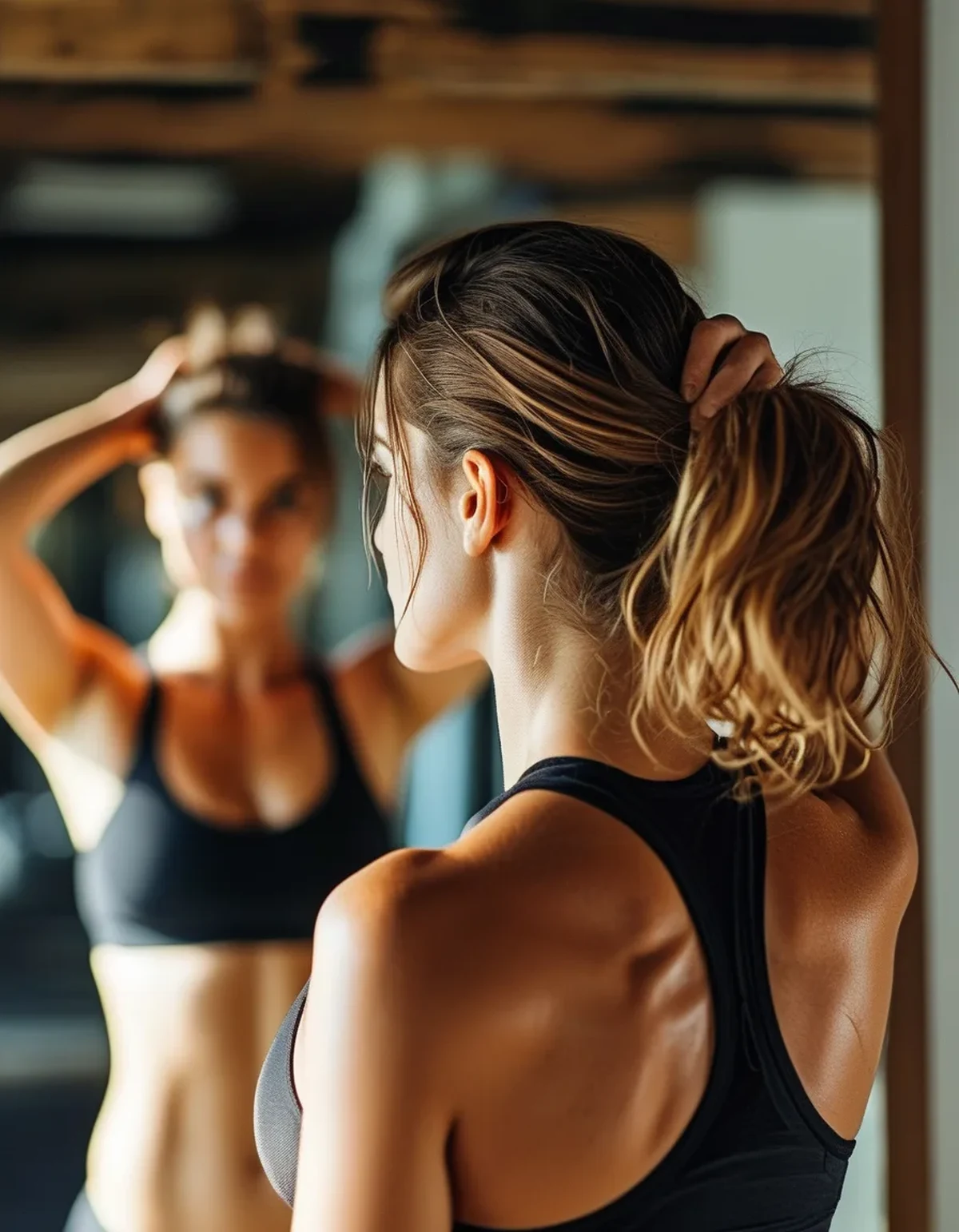
High-impact classes, running, HIIT: a low braid or two braids, secured at the ends with a soft band. Braiding distributes the weight along the length rather than hanging it all off one point, and it survives sweat far better than a ponytail.
Lifting, especially anything against a bench or rack: low bun or a low twisted style, sitting below where the head contacts anything. This also stops the tie from being pressed into your skull during bench and rack work, which is its own separate discomfort.
Yoga, Pilates, mat work: a side braid or a low loose knot — anything that does not sit on the back of the head, since you will be lying on it.
Cycling and spin: a low ponytail plus a wide fabric headband, not a thin one. The helmet or headband pressure is the variable here rather than the tie.
All of them: if you are wearing a hat or headband, loosen the hair tie to compensate. Two moderate pressures in the same place add up to one problematic one.
And a general rule that costs nothing: if you can feel the tie after two minutes, it is too tight. A tie you can feel at rest becomes a tie you cannot ignore under load.
FAQ: Workout Hair Headache Questions, Answered
How long should it take to go away?
Traction headache typically resolves within an hour of releasing the hair, often within minutes. If a headache persists for hours after you have taken your hair down, it is probably not the tie — look at neck tension, dehydration, or, if it is a recurring pattern with light sensitivity or nausea, a conversation with a clinician about migraine. This is general information, not medical advice.
Do silk scrunchies actually help?
For breakage, yes — less friction on the hair shaft. For headache, only insofar as they are wider and softer than a thin elastic, which spreads the pressure. Width and softness are what matter, not the fibre.
Is short hair immune?
No. Short hair pulled into a small tight tie, or held by clips against the scalp, produces the same traction in a smaller area. Half-up styles pulled tight at the crown are a common culprit.
TL;DR:
- Ponytail headache is a recognised traction headache — cumulative, so it starts after the tie feels fine.
- Sweat weight, repeated tugging and head contact with equipment make training the worst case.
- Go lower and looser, braid for high-impact work, and use a wide soft band.
- Retie halfway through the session — the single most effective fix and it takes ten seconds.
- Rotate tie position between sessions; constant traction in one spot risks traction alopecia over years.
Do one thing next session: set a mental marker at the halfway point and retie. If the headache does not show up, you have your answer and a permanent fix that costs nothing.
Keep Reading
This article is for general informational and styling purposes only. Fit, sizing, and product availability may vary.