Training Braids: The Styles That Survive Every Workout
The braid is training hair’s oldest technology — and the right braid for the workout is a real decision: the boxer braids that survive burpees, the crown that fits under helmets, the single Dutch that inverts without stabbing. The training-braid guide.
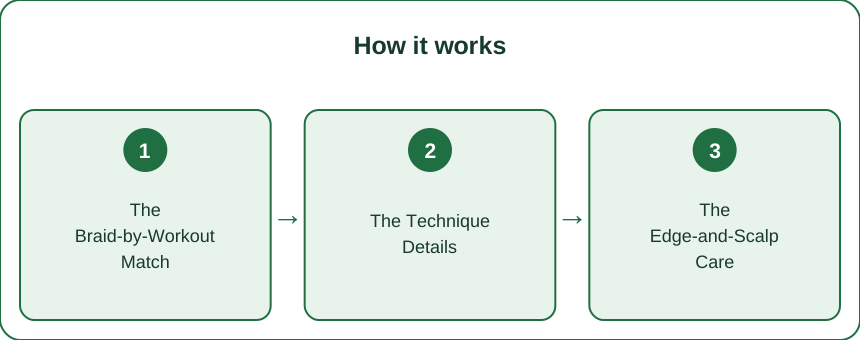
The Braid-by-Workout Match
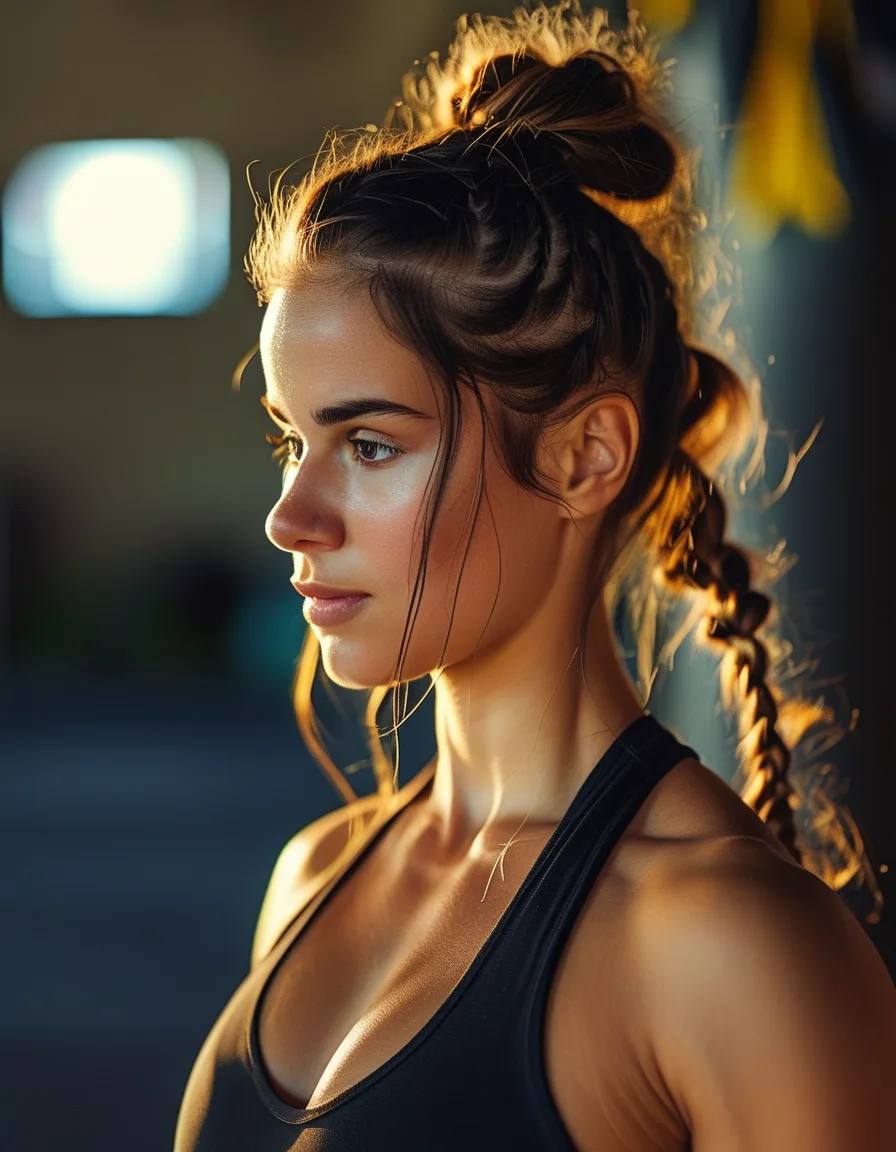
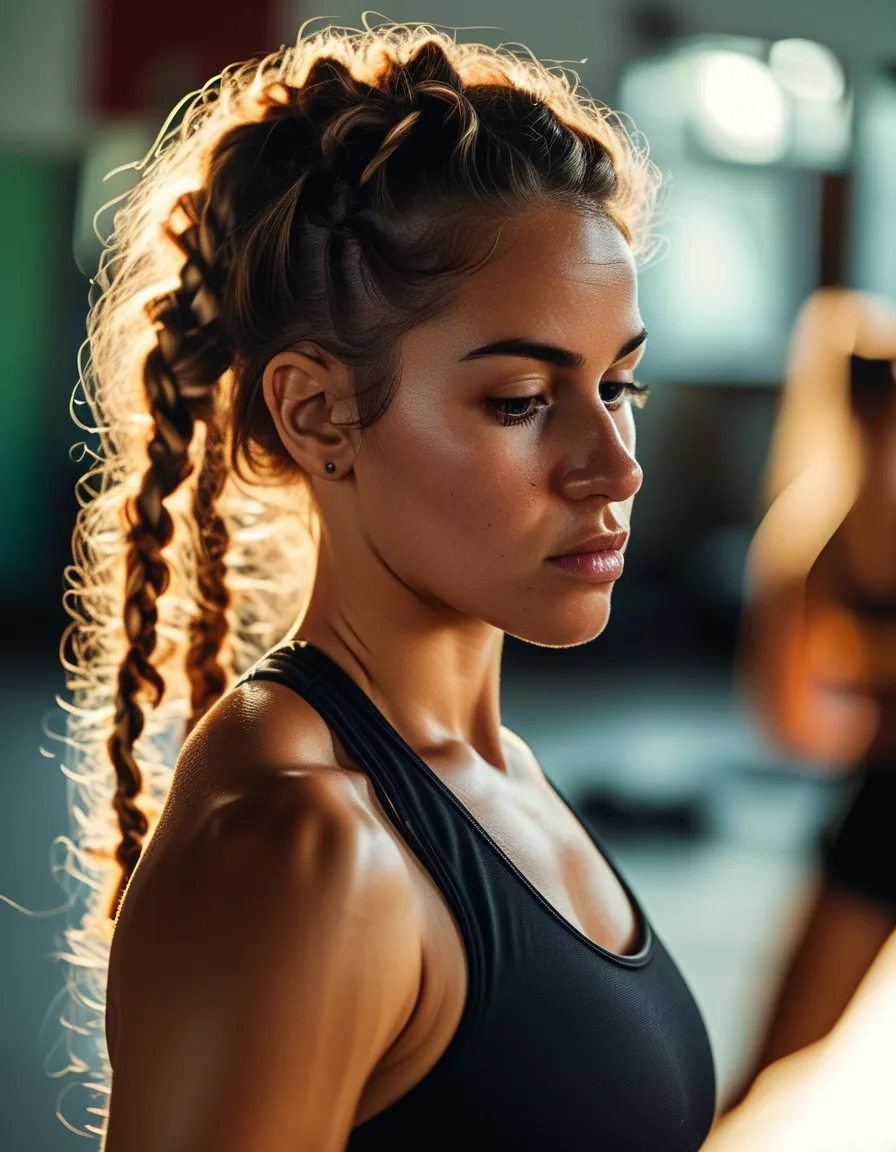
Style to session: the double Dutch (boxer) braids (the high-intensity standard — HIIT, boxing and anything with impact; the two-braid balance that stays put through burpees and looks intentional doing it), the single French-or-Dutch (the lifting and studio classic — the one-braid simplicity that lies flat under bench work; the supine-friendly choice the ponytail bump fails), the crown-and-halo braids (the helmet-compatible tier — cycling and climbing’s answer; the braid that circles avoids every strap and buckle), the braided ponytail hybrid (the braid-into-pony that shortens swing for running — the mid-length compromise), and the pineapple-adjacent loose braid (the curly-hair training braid from the curl chapters — pattern-protective and sweat-tolerant).
The Technique Details
Braids that hold: the dirty-hair advantage (day-two hair braids better — the slip of fresh-washed hair fights every braid; the wash-day schedule and the braid schedule coordinate), the tension calibration (snug at the roots without scalp-pull — the too-tight braid headaches by set three and bills the edges long-term; secure is the spec, punishing isn’t), the anchor toolkit (the small elastic tiers, the bobby-pin reinforcements at the nape, and the finishing mist that tames the halo frizz — the braid’s supporting cast), the Dutch-over-French note for sport (the underhand Dutch braid sits prouder and holds tighter through movement — the training braid’s technical preference), and the practice honesty (braiding your own head is a learnable skill with a comedy phase — the tutorial-and-repetition curve of two weeks; the milestone braid that survives a whole workout is the graduation).
The Edge-and-Scalp Care
Keeping braids kind: the tension-damage awareness (the constant tight styles bill the hairline — traction issues are cumulative and preventable; the edges are the canary), the rotation doctrine (braid placements varied — the same parting daily stresses the same follicles; the style wardrobe that moves the load around), the rest-day-hair concept (the loose days between braid days — hair’s version of the recovery chapter; the seven-day tight-braid week is the pattern to break), the edge-care layer (the gentle handling of the baby hairs, the satin-lined cap under helmets, the moisture attention at the hairline), and the protective-style crossover (the longer-term braided styles from the protective-styles chapter carrying their own workout advantages — the wash-day economics of training in week-long styles).
The Practical Rhythm
The braid week: the schedule integration (braid day aligned post-wash-day-plus-one — the grip window; the braid surviving 2-3 workouts before the refresh), the refresh protocol (the edges smoothed and the elastic replaced without full re-braiding — the two-minute revival between sessions), the sleep extension (the braid that trains all day sleeps on satin and survives to tomorrow — the style amortized across days; the braid-week economics that halve hair labor), and the confidence note (the braid solved training hair a century before dry shampoo — the style that works IS the style that reads athletic-intentional; function was always the fashion here). Braided by workout, tensioned kindly, rotated weekly: hair, handled.
Boxer braids for impact, crowns under helmets, day-two hair grips best, rotate the tension. Training braids are matched technology — the right braid survives the workout and the week.
Keep Reading
This article is for general informational and styling purposes only. Fit, sizing, and product availability may vary.