The Curly Hair Workout Routine That Actually Survives Sweat (Without Ruining Your Curls)
Quick Answer: Protect curls before sweating with a low, loose style that avoids tension on the hairline, and refresh (don’t rewash) with a water-diluted leave-in after. Full rewashing more than 2-3 times a week strips curls and causes more frizz than it fixes.
Straight hair can get away with a plain ponytail and a rinse. Curly hair has a different set of rules, and most gym hair advice completely ignores curl pattern.
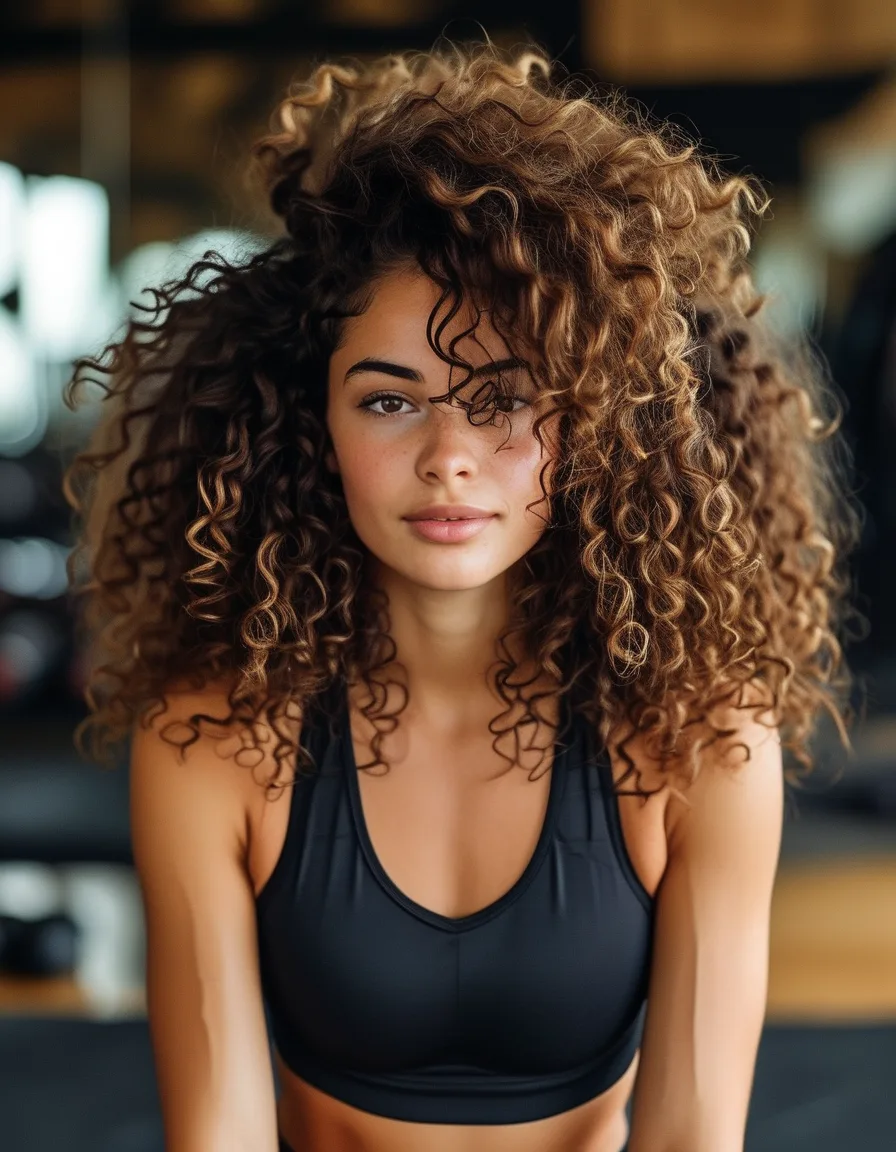
Why does sweat hit curly hair differently than straight hair?
Curl pattern relies on a specific moisture balance — sweat’s salt content and the friction of a tight ponytail disrupt that balance faster than it does on straight strands, which is why curls tend to revert to frizz mid-workout rather than just going flat.
The hairline is the most vulnerable spot: repeated tension from tight styles causes traction thinning over months, which is a real and common issue for curly-haired women who train regularly with tight buns.
What’s the actual pre-workout routine that protects curls?
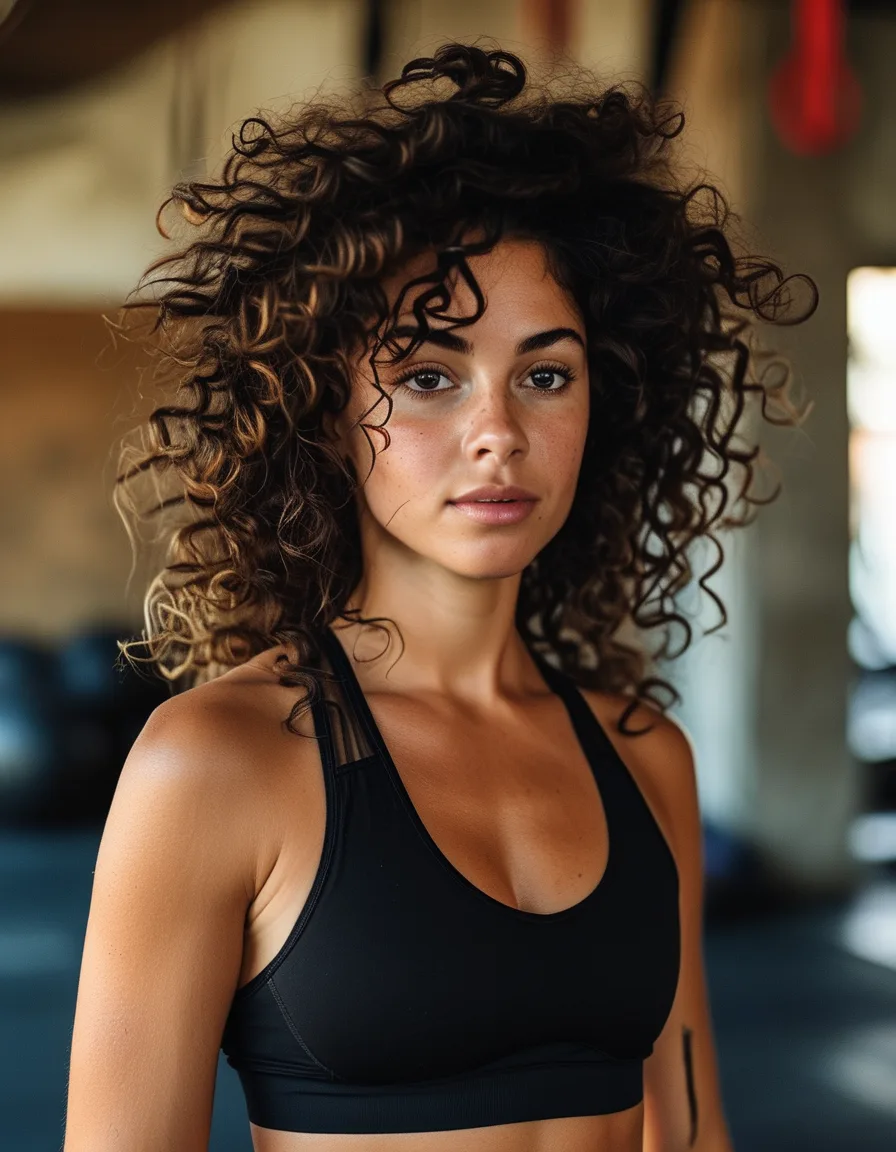
Style low and loose — a low bun or braid rather than a high, tight ponytail reduces both frizz and hairline tension. If you use an elastic, choose one without metal, which snags and breaks curl clumps.
A light anti-humectant cream on the hairline and edges before your workout helps block sweat from immediately reverting the curls closest to your face, which is usually the first place frizz shows.
Do I really need to wash my hair after every sweaty session?
No — and this is the mistake most curly-haired women make. Full washing more than 2-3 times a week strips natural oils that curls depend on more than straight hair does, leading to more frizz, not less.
Instead, refresh with a diluted leave-in spray (leave-in mixed with water in a spray bottle) on off-wash days. Scrunch gently, let air dry or diffuse on low heat.
Myth vs Fact: Curly Hair and Exercise
Myth: You should just wash your hair every time you sweat. Fact: over-washing is the bigger threat to curl health for most people — refresh routines protect the curl pattern far better.
Myth: A tight, high ponytail is the most “secure” option. Fact: tight, repeated tension on the same hairline spot is a leading cause of traction alopecia in women who train 4+ times a week.
Myth: Curly hair just can’t handle regular workouts. Fact: it handles it fine with the right pre- and post-routine — the issue is applying straight-hair advice to curl patterns.
FAQ: Curly Hair and Gym Questions, Answered
What’s the fastest way to refresh curls between classes if I have back-to-back sessions?
A spray bottle with water and a few drops of leave-in, scrunched through, takes under 2 minutes and resets most of the frizz.
Should I diffuse dry after every wash?
Not necessary every time — air drying on rest days is gentler and reduces cumulative heat exposure.
Is a silk or satin headband actually worth it?
Yes for hairline protection specifically — it reduces the friction that causes breakage right at the edges, more than cotton alternatives.
TL;DR:
- Sweat and tight ponytails disrupt curl pattern faster than straight hair
- Style low and loose, skip metal elastics
- Refresh with diluted leave-in instead of washing more than 2-3x weekly
- Protect the hairline specifically — that’s where lasting damage shows up first
Curly hair doesn’t need to sit out of a sweaty workout routine — it just needs a routine built for curl pattern instead of borrowed from straight-hair advice.
Keep Reading
This article is for general informational and styling purposes only. Fit, sizing, and product availability may vary.