Leaving the Gym With Wet Hair in Cold Weather: What Actually Happens
Quick Answer: Wet hair will not give you a cold - that is viral, not thermal. What it will do is break, because wet hair is 20 to 30 percent weaker than dry hair and freezing water inside the shaft expands and damages the cuticle from within. Below about 5C this becomes a genuine breakage risk. Getting hair to at least 80 percent dry before going out solves it, and takes less time than fully drying.
The worst combination is wet hair plus a tight hat plus friction, which is exactly what most people do after a workout.

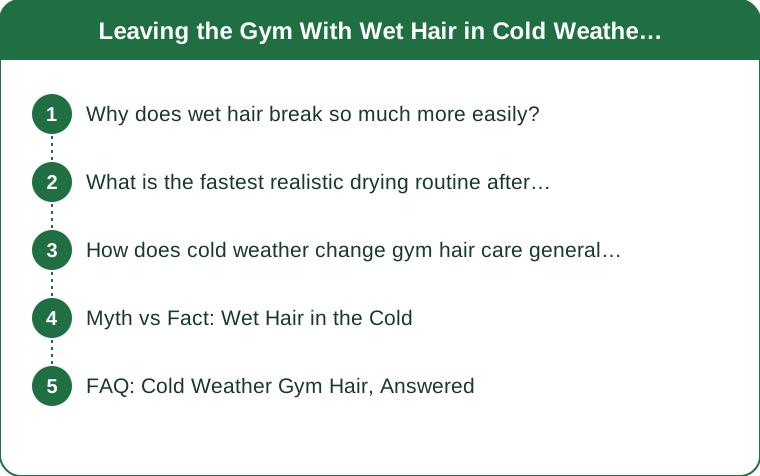
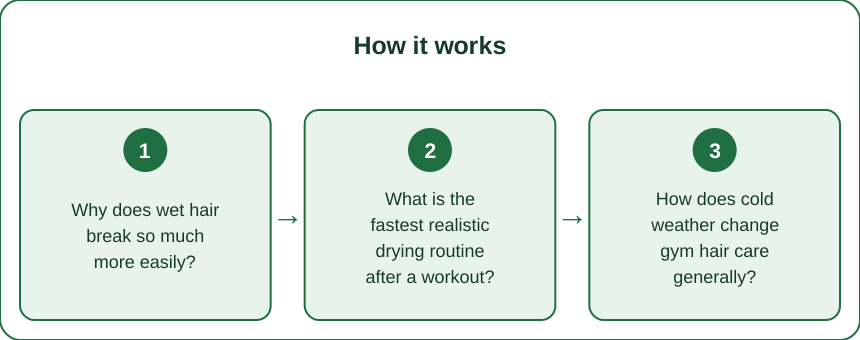
Why does wet hair break so much more easily?
Because water fundamentally changes the mechanical properties of the hair fibre.
The strength difference. Wet hair is roughly 20 to 30 percent weaker in tensile strength than dry hair and stretches considerably further before breaking. Water penetrates the cortex and disrupts the hydrogen bonds that give hair its structure.
What that means in practice:
- Brushing wet hair causes far more breakage than brushing it dry - this is the most consequential everyday consequence
- Wet hair stretches under its own weight when long, and repeated stretching causes cumulative damage
- Friction against fabric is more damaging on a wet cuticle, which is swollen and lifted
The freezing issue, which is the specifically cold-weather part. Water inside the hair shaft expands as it freezes. Below about 0C this can genuinely damage the cuticle from the inside. Between 0 and 5C the hair is not freezing but it is cold, wet, and swollen - which is a fragile state to then put a hat on top of.
Why a hat over wet hair is the worst combination:
- Compression against a swollen, weakened cuticle increases friction damage
- The hair dries in a compressed shape, setting in whatever pattern the hat imposed
- Trapped moisture against the scalp for a long period creates conditions that can irritate the scalp
- Removing the hat pulls at hair that is still wet and weak
The cold-and-illness myth, briefly. Colds are caused by viruses, and being cold with wet hair does not create one. There is some evidence that cold exposure may modestly affect immune response, but the mechanism people imagine - cold hair causing illness - is not real. The reason to dry your hair is your hair, not your immune system.
Scalp health is the one genuine health consideration. Prolonged dampness against the scalp, particularly under a hat, can contribute to irritation and fungal issues in susceptible people. Repeatedly leaving with a soaking wet scalp under a hat is worth avoiding for that reason rather than for fear of a cold.
What is the fastest realistic drying routine after a workout?
Get to 80 percent dry, which takes a fraction of the time of getting to 100.
Why 80 percent is the target. The last 20 percent of drying takes disproportionately long and provides most of the heat damage. At 80 percent dry the hair has regained most of its strength and is no longer at freezing risk.
The sequence, which takes about 5 to 8 minutes:
- Squeeze, do not rub. Rubbing with a towel is one of the most damaging things you can do to wet hair - it lifts the cuticle and creates frizz and breakage. Squeeze sections between your palms
- Use a microfibre towel or a cotton t-shirt rather than a terry towel. The loops in terry towelling catch and pull at the cuticle
- Wrap for 5 minutes while you get dressed. This alone removes a large proportion of the water passively
- Apply a leave-in conditioner or heat protectant to damp hair
- Rough dry on medium heat for 3 to 5 minutes, keeping the dryer moving and about 15cm away
- Stop at 80 percent and let the rest air dry
The shortcut for anyone who cannot dry at the gym:
- Braid or twist damp hair loosely rather than leaving it down. This reduces friction against clothing and hats substantially
- A silk or satin-lined hat, which is the single most useful purchase for this problem. It removes friction almost entirely
- A satin scarf or bonnet under a regular hat achieves the same for less money
- Never tie wet hair tightly. A tight elastic on wet hair is the highest-breakage combination there is
Reducing how wet it gets in the first place:
- Do not wash every session. Most people over-wash gym hair - rinsing the scalp and conditioning the lengths is often enough
- A shower cap for non-hair-wash days is unglamorous and saves large amounts of time and damage
- Dry shampoo at the roots before a workout, not after, absorbs sweat as it is produced rather than sitting on top of it
- Sweat-wicking headbands genuinely reduce how wet the hairline gets
On washing frequency in cold months. Reduced sebum production and dry indoor air mean most people can extend time between washes in autumn, which conveniently solves the wet hair problem for several sessions a week.

How does cold weather change gym hair care generally?
Dryness replaces oiliness as the main problem, and the routine should follow.
What changes when the heating comes on:
- Indoor humidity drops to 20 to 30 percent, which pulls moisture from hair continuously
- Static increases sharply, especially with hats and synthetic fabrics
- Sebum production is somewhat reduced, so hair gets less greasy between washes
- Hat friction becomes a daily factor it was not in summer
Adjusting the routine:
- Reduce wash frequency by one day a week, since the scalp needs it less
- Switch to a more moisturising conditioner or add a weekly mask
- A leave-in conditioner becomes genuinely useful rather than optional - it creates a barrier against dry air and reduces static
- Cooler rinse water, since hot water lifts the cuticle and strips lipids
Managing hat hair without damaging it:
- A looser hat, which reduces both compression and the flattening effect
- Satin or silk lining, which prevents the friction that causes breakage at the hairline
- Do not put a hat on soaking wet hair if avoidable, for all the reasons above
- Change where you part your hair on hat days, so the compression line falls differently
Static, which is the most annoying daily symptom:
- A light oil or serum on the mid-lengths and ends
- A wooden or natural-bristle brush, which builds far less charge than plastic
- Natural fibre hats - wool, cotton - rather than acrylic, which is the worst offender
- Room humidity, which is the actual fix if you can manage it
Protecting the hairline specifically. The hairline takes the most damage from headbands, hats, and tight styles, and breakage there is slow to recover because the hairs are fine.
- Rotate hairstyles rather than using the same tight ponytail daily
- Silk or satin scrunchies rather than elastics with metal
- Loosen the style before a hat goes on, since combining tension sources is what causes visible thinning
- If you see genuine thinning at the temples or hairline, change the styling habits promptly - traction alopecia is reversible early and much less so later. Persistent hair loss warrants a professional assessment. This is general information, not medical advice.
Myth vs Fact: Wet Hair in the Cold
Myth: Going out with wet hair gives you a cold. Fact: Colds are viral. You cannot catch one from being cold or from wet hair, and this has been tested directly. Cold exposure may have a modest effect on immune response, but the mechanism people imagine does not exist. Dry your hair for your hair’s sake.
Myth: Air drying is always gentler than blow drying. Fact: Prolonged wetness itself damages hair - the cortex swells and the cuticle stays lifted for as long as it is wet. A quick rough dry on medium heat with a heat protectant is often less damaging than leaving hair soaking for two hours, particularly in the cold.
Myth: You should brush wet hair to detangle it while it is soft. Fact: Wet hair is 20 to 30 percent weaker and stretches further before snapping. Use a wide-tooth comb on conditioner-coated hair in the shower, then leave it alone until it is mostly dry.
Myth: Rubbing with a towel dries it faster and does no harm. Fact: Terry towel loops catch the lifted cuticle and cause both breakage and frizz. Squeezing with a microfibre towel or a cotton t-shirt removes similar water with a fraction of the damage.
Myth: Hat hair is just a styling annoyance. Fact: Compression plus friction on a wet or dry cuticle causes genuine breakage over a season, particularly at the hairline. A satin-lined hat is the cheapest fix for a real problem, not a luxury item.
FAQ: Cold Weather Gym Hair, Answered
Can I really not catch a cold from wet hair?
No - colds are caused by viruses and cold exposure does not create them. This has been tested directly. The reason to avoid going out with wet hair in the cold is breakage, not illness.
How dry does my hair need to be before going outside?
About 80 percent. At that point it has regained most of its strength and is not at freezing risk. Getting from 80 to 100 percent takes disproportionately long and causes most of the heat damage.
What is the fastest way to dry hair after a workout?
Squeeze with a microfibre towel or cotton t-shirt, wrap for five minutes while you dress, apply a leave-in, then rough dry on medium for three to five minutes. Total about eight minutes.
Is it bad to put a hat on wet hair?
Yes, it is the worst combination - compression and friction on a swollen, weakened cuticle, with the hair drying in whatever shape the hat imposes. If unavoidable, braid loosely first and use a satin-lined hat.
Should I wash my hair after every workout?
Usually not. Rinsing the scalp and conditioning the lengths is often enough, and in cold months reduced sebum means most people can extend time between washes. This also solves the wet hair problem several days a week.
Why is my hairline thinning where my headband sits?
Likely traction from repeated tension in the same place. Rotate hairstyles, use satin scrunchies, and loosen styles before a hat goes on. Early traction damage is reversible; persistent loss should be assessed by a professional.
TL;DR:
- Wet hair does not cause colds - but it is 20 to 30 percent weaker and freezing water expands inside the shaft
- Get to 80 percent dry before going out; the last 20 percent costs most of the time and heat damage
- Squeeze with microfibre or a t-shirt, never rub with a terry towel
- Hat over wet hair is the worst combination - braid loosely and use a satin lining
- Wash less often in cold months; reduced sebum means you probably do not need to
Eight minutes of drying protects hair that takes months to grow back. The cold-catching worry is unfounded; the breakage is not.
Keep Reading
This article is for general informational and styling purposes only. Fit, sizing, and product availability may vary.