Caps or Headbands: Which One Is Actually Wrecking Your Hair?
Quick Answer: Headbands cause more localised breakage, because they concentrate pressure and friction along one narrow line — usually the hairline, where the finest and most fragile hairs are. Caps cause more scalp problems — occlusion, sweat retention, itching and folliculitis — plus a broader friction band where the brim sits. Neither causes hair loss on its own. Elastic tension and sweat left in place for hours do more damage than either item.
The honest answer is that both are fine if you manage sweat and tension, and both are damaging if you do not.
Here is what each one actually does, and which one to choose for which situation.
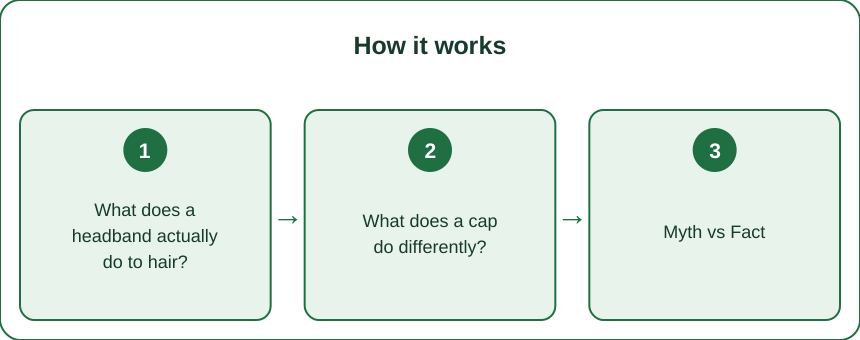
What does a headband actually do to hair?
It applies concentrated pressure and friction along a very narrow line, which is why the damage is so distinct.
Friction at the hairline is the main mechanism. As you move, the band shifts fractionally against the hair thousands of times per session. Hair is a fibre with a scaled surface, and repeated rubbing lifts and chips those scales, which leads to a roughened cuticle, then to splitting, then to breakage.
The hairline has the most vulnerable hair on your head. Baby hairs and the fine hairs along the front hairline are thinner, shorter and newer than the rest, and they break at a fraction of the force that a full-length hair needs. This is why the damage from headbands shows up as a halo of short broken hairs across the forehead rather than as thinning.
Tension compounds it. A headband tight enough not to slip is tight enough to pull continuously on the hairs it crosses. That combination — sustained tension plus friction — is worse than either alone.
The damage is highly localised, which is diagnostically useful. A band of breakage exactly where the headband sits, with normal hair above and below, tells you the cause without ambiguity.
Material matters a great deal here. A terry or elasticated band with a rough surface grips hair and drags it. A wide, smooth, non-elastic band distributes pressure and slides less. This single choice changes most of the outcome.
What headbands do well: they keep sweat out of your eyes, which is their actual job, and they leave the scalp open to air, which caps do not.
What does a cap do differently?
It shifts the problem from the hair to the scalp, and spreads the friction over a wider area.
Occlusion is the defining difference. A cap traps heat and moisture against the scalp for the whole session. A warm, damp, enclosed environment encourages the yeast and bacteria that normally live on the scalp to overgrow, which is a recognised contributor to seborrhoeic dermatitis, itching, flaking and in some cases folliculitis — inflamed hair follicles that look like small spots.
Sweat sits in place instead of evaporating. Sweat is salty and mildly acidic, and left on the scalp under a cap for an hour it irritates skin and dries hair. This is the biggest single reason people find their scalp itches for hours after a capped workout.
Friction is broader but gentler. The brim band presses around the whole circumference, so instead of one narrow damage line you get a wider, less severe friction zone. Many people see a ring of roughened, frizzy hair rather than clean breakage.
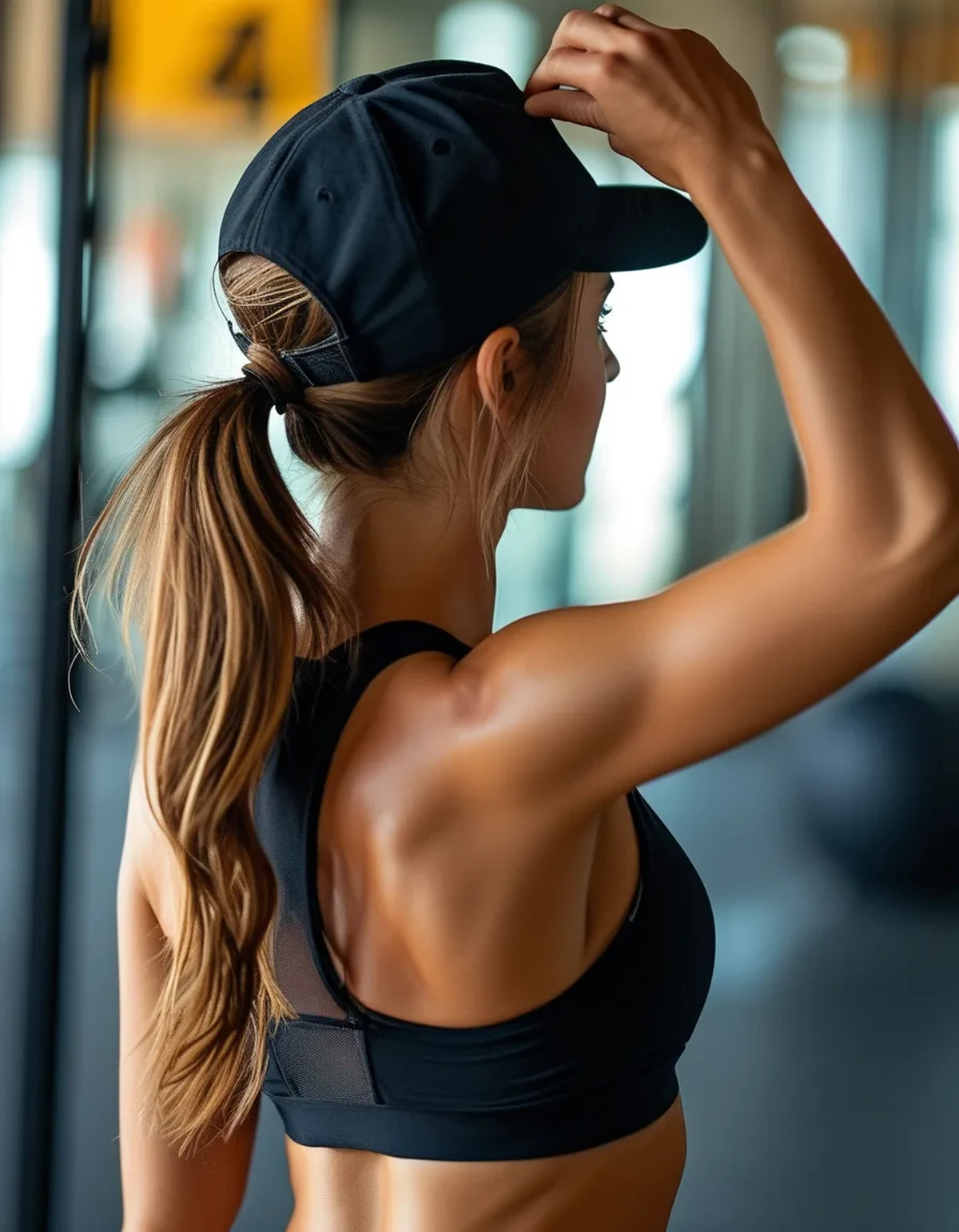
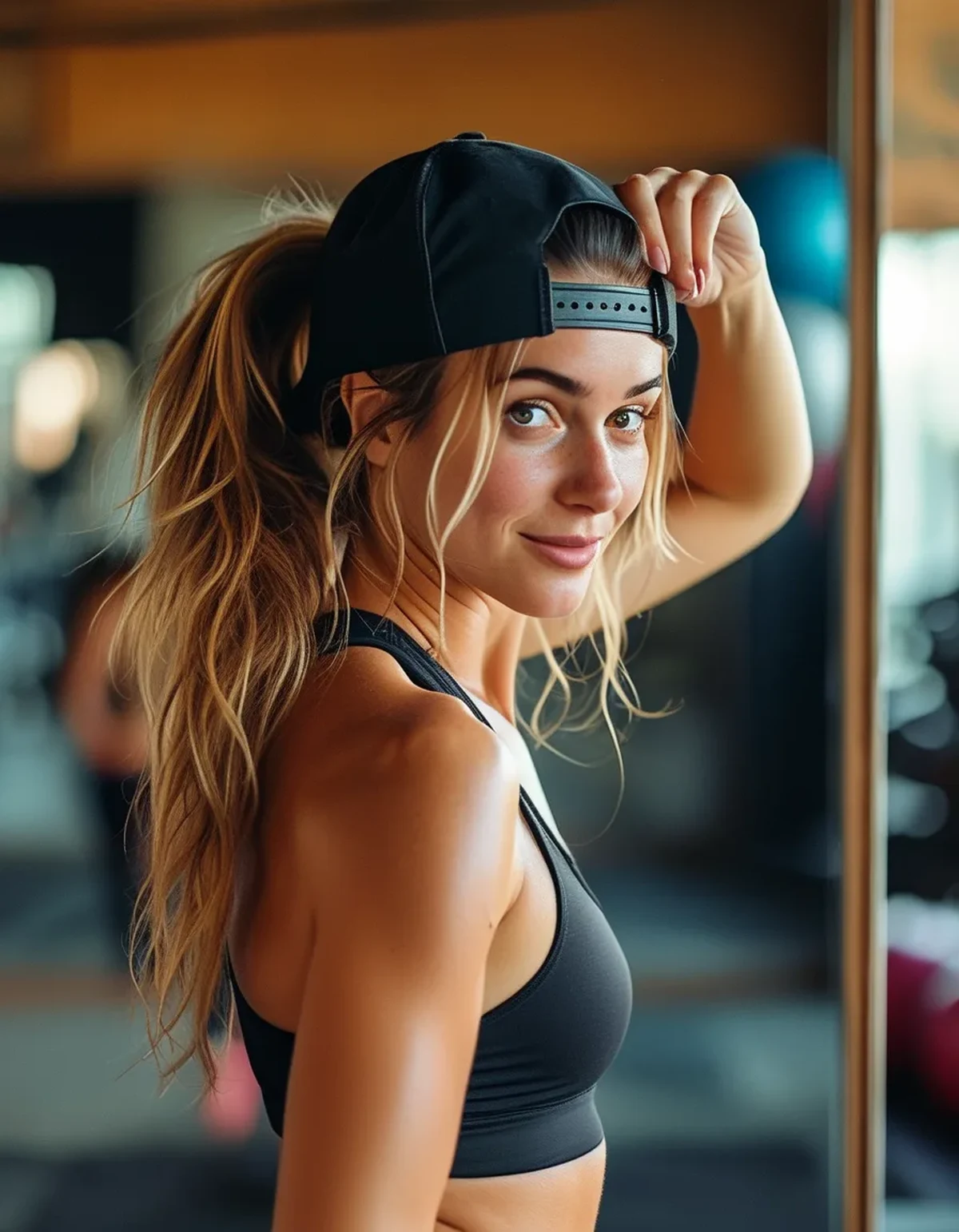
The ponytail hole is a hidden problem. Pulling a ponytail through the back gap concentrates tension at one spot on the crown and at the elastic, and doing it the same way every session produces exactly the localised breakage you were trying to avoid.
Caps also protect from UV, which matters for outdoor training and is genuinely useful — the scalp and the part line burn easily and are frequently missed by sunscreen.
And caps are dirtier than people think. A cap absorbs sweat, sebum and product and is rarely washed, which means you are pressing an accumulating layer of it against your scalp every session. This is the most commonly overlooked factor in cap-related scalp problems.
Myth vs Fact: Hats, Headbands and Hair Loss
Myth: Wearing a hat causes baldness. Fact: It does not. Pattern hair loss is driven by genetics and hormones, not by headwear, and a normally fitted cap does not restrict blood flow to the scalp in any meaningful way. The persistent version of this myth has no support.
Myth: Headbands cause hair loss. Fact: They cause breakage, which is different. Breakage means the hair shaft snaps partway along its length; hair loss means the hair leaves the follicle. Broken hair regrows normally once the friction stops. That said, very tight styles worn habitually can cause traction alopecia, which is genuine follicle-level loss — and a very tight headband combined with a tight ponytail, worn daily for years, sits within that risk.
Myth: Sweating is bad for your hair. Fact: Sweating is fine. Sweat left in place for hours is the problem, because salt dries the hair shaft and the damp environment irritates the scalp. It is a timing issue, not a sweating issue.
Myth: A cap protects your hair. Fact: From UV, genuinely yes. From friction and heat, no — it creates its own version of both. It is a trade, not a shield.
Myth: Damage at the hairline means your hair is thinning. Fact: A band of short broken hairs at the exact height of a headband is breakage. Thinning is diffuse and involves fewer hairs overall rather than shorter ones in one line. If you can see the boundary, it is mechanical.
Myth: Wet hair under a cap is fine because it will dry. Fact: It is the worst combination. Wet hair is at its weakest and most prone to mechanical damage, and a cap over wet hair keeps the scalp damp for hours, which is exactly the environment scalp problems need. This becomes a very common autumn habit — leaving the gym with wet hair and pulling a cap on because it is cold outside — and it is worth avoiding specifically.
What should you actually do?
Choose by session type, then manage tension and sweat. That covers nearly all of it.
Pick a headband for indoor and high-sweat sessions. Sweat in the eyes is the actual problem indoors, and the scalp stays open to air. Choose a wide, smooth, non-elastic band, and rotate its position by a centimetre or two between sessions so the same hairs are not always under it.
Pick a cap for outdoor training and sun. UV protection for the scalp and part line is a real benefit that a headband cannot offer. Choose a moisture-wicking fabric rather than cotton, and prefer a looser fit with ventilation over a snug one.
Manage the tension, whichever you use. The single biggest improvement available is loosening the style underneath. A slightly lower, slightly looser ponytail or a loose braid distributes force very differently from a high, tight ponytail under a tight band.
Move the anchor point. Alternate where your ponytail sits, where the headband crosses, and which way you thread hair through a cap. Damage comes from repetition at one point, and varying it is free.
Get the sweat out promptly. Take the cap or band off as soon as you finish, and let hair dry down rather than staying tied up damp. If you cannot wash, rinsing the hairline with water or using a damp cloth removes most of the salt.
Wash the item itself. Caps and headbands should go through the wash regularly — weekly if you train most days. Almost nobody does this and it is the fix for a surprising share of scalp complaints.
Use a smooth hair tie, no metal join, and never a rubber band. The elastic is more often the cause of breakage than the headwear is.
And do not put a cap on wet hair, especially heading out into cold air. As the weather turns, this becomes the most common new source of both breakage and scalp irritation.
If you have persistent scalp itching, flaking, sore spots or visible thinning, that is worth seeing a dermatologist about rather than adjusting your gym kit. This is general information, not medical advice.
FAQ: Gym Headwear Questions, Answered
Which one is worse overall?
For the hair shaft, headbands, because of concentrated friction at the fragile hairline. For the scalp, caps, because of occlusion and trapped sweat. Choose based on which problem you are more prone to.
Can I wear both?
Yes, and plenty of people do for outdoor training in summer — a thin band under a cap manages sweat while the cap manages sun. It doubles the friction, so keep both loose and clean.
Are silk or satin headbands better?
Meaningfully, yes. Smoother surfaces cause less friction against the cuticle, and the same logic that supports silk pillowcases for breakage applies here with a much shorter contact time but far more movement.
How do I fix existing hairline breakage?
Remove the cause, keep the area moisturised, avoid heat styling on the broken section, and be patient. Broken hairs regrow, but hairline hairs are short by nature so it takes a few months to look normal again. Trimming will not speed it.
Does it matter if my cap is too tight?
Yes. A cap that leaves a mark on your forehead is applying enough sustained pressure to matter, and it makes the friction band worse. Size up or loosen the adjuster.
What about wearing a cap to hide unwashed hair?
Common and mostly fine, with the caveat that a cap over dry shampoo residue and oil against a warm scalp is exactly the environment that produces itching. If you do it often, wash the cap often.
TL;DR:
- Headbands = concentrated friction at the hairline, where the finest hairs are. Damage is a visible band of breakage.
- Caps = occlusion, trapped sweat, scalp irritation and a wider friction ring. Plus real UV protection outdoors.
- Neither causes baldness. Very tight styles worn daily for years can cause traction alopecia — that is tension, not headwear.
- The fixes are the same either way: looser tension, varied position, prompt sweat removal, and washing the item.
- Never put a cap on wet hair, especially heading out into cold air.
Headband indoors, cap outdoors, and wash both weekly. That is most of the answer.
Keep Reading
This article is for general informational and styling purposes only. Fit, sizing, and product availability may vary.