Why Training Fades Your Hair Color Faster Than Anything Else
Quick Answer: Sweat is salty and mildly acidic, and repeated exposure plus the frequent washing it prompts is what strips color fastest — not the workout itself. Rinse with cool water after training instead of shampooing every time, use a sulfate-free color-safe shampoo, and pre-wet your hair before swimming. Reds and fashion colors fade fastest; sweat also oxidizes color, shifting tone before it shifts intensity.
You paid for color in early August and by the first week of September it looks two shades lighter and slightly the wrong tone.
You also trained five days a week in between. Those two facts are directly connected, and there are about six things that change it.

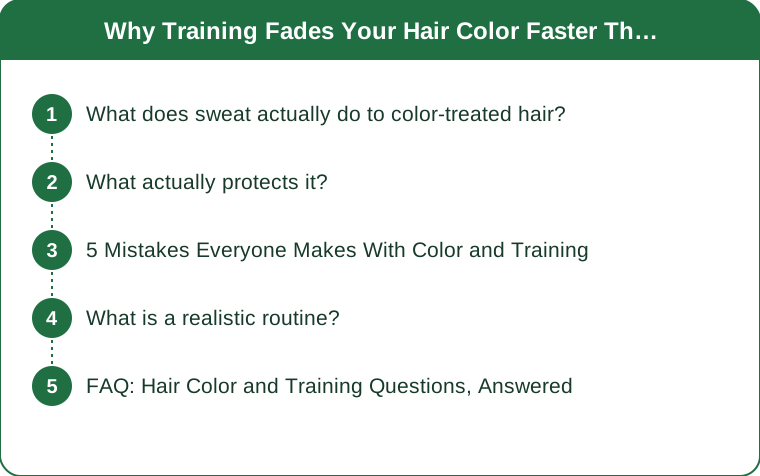
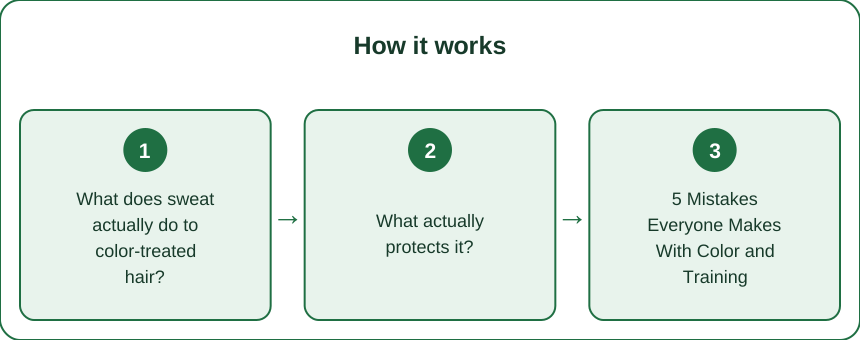
What does sweat actually do to color-treated hair?
Three things, working together.
1. Salt draws moisture and pigment outward. Sweat contains sodium chloride, and salt water on hair is a mild osmotic process — it pulls moisture from the hair shaft, and dye molecules migrate with it. This is the same reason ocean swimming fades color.
2. Sweat is slightly acidic and it oxidizes. As sweat dries on hair over hours, it drives a gradual oxidation of the dye molecules. This changes tone before it changes intensity — which is why faded color often looks brassy or off rather than simply lighter.
3. It triggers washing. This is the biggest factor by far. Every shampoo removes some color, and someone training five days a week who washes each time is shampooing 20 times a month versus perhaps 8 for someone who is not.
Heat compounds it. A hot shower opens the cuticle and releases more pigment. Hot yoga and heated studios accelerate this substantially, combining heat, heavy sweat, and a near-certain wash afterward.
Which colors suffer most: reds and coppers fade fastest because red dye molecules are larger and sit less securely in the shaft. Fashion colors and pastels are next. Brunettes fade least, and blondes tend to shift tone rather than lose depth.
What actually protects it?
1. Rinse with cool water instead of shampooing. This is the single biggest change available.
A cool water rinse removes most sweat and salt. Shampoo is not required after every workout, and rinse-only after training with a full wash two or three times a week preserves color dramatically better.
2. Use a sulfate-free color-safe shampoo when you do wash. Sulfates are effective detergents and they strip color efficiently. The difference between a sulfate shampoo and a sulfate-free one is measurable over a month of frequent washing.
3. Wash with cooler water. Hot water opens the cuticle. Lukewarm to cool for the wash, cool for the final rinse. Uncomfortable in autumn and genuinely effective.
4. Dry-condition before training. A leave-in conditioner or light oil applied before a workout creates a barrier that limits how much sweat penetrates the shaft. This is the most under-used trick and takes thirty seconds.
5. Do not let sweat dry in your hair for hours. The oxidation happens over time. Rinsing within an hour or two limits it considerably.
6. Pre-wet before swimming. Hair absorbs a limited amount of water, and hair already saturated with clean water absorbs much less chlorinated pool water. Add a leave-in conditioner and a cap and chlorine damage drops substantially.
7. Wear it up, loosely. Sweat concentrates at the scalp and nape. Keeping length off your neck reduces how much of it sits in the sweat.

5 Mistakes Everyone Makes With Color and Training
1. Shampooing after every single session. The default assumption that a workout requires a full wash is the primary cause of fast fade. Rinse-only works better than most people believe.
2. Using dry shampoo as the alternative. It absorbs oil at the root and does nothing about salt in the length. It also builds up on the scalp and can dull color-treated hair over time. Useful occasionally, not as a rinse substitute.
3. Tying wet hair up tightly. Hair is at its weakest when wet, and a tight elastic on wet hair causes breakage that looks like fading because damaged ends hold color badly. Loose, and with a fabric scrunchie or coil tie.
4. Colouring the day before a big training week. Color needs about 48 to 72 hours to fully settle in the shaft. Sweating heavily within that window costs you noticeable vibrancy. Book color for a rest day.
5. Ignoring the water itself. Hard water deposits minerals that dull color and shift blonde tones. A shower filter is a real fix if your area has hard water and you shower daily after training.
The mistake that surprises people: blaming the salon. Color that fades in four weeks with daily training is behaving normally — the eight-week expectation was set for someone washing their hair three times a week.
What is a realistic routine?
Before training: hair up loosely, leave-in conditioner or a light oil through the mid-lengths and ends. Thirty seconds.
After training: cool water rinse, condition the ends, out. Full shampoo two or three times a week, on the days you need it most.
Weekly: a color-depositing conditioner or gloss in your shade. These genuinely extend the life of color between salon visits and are inexpensive.
Monthly: a clarifying wash to remove product and mineral buildup, immediately followed by a deep conditioning treatment. Clarifying does remove some color, which is why it should be occasional rather than routine.
Booking: schedule salon color for a rest day, ideally with two days before your next hard session.
Realistic expectation: with these changes, color that was lasting four weeks commonly stretches to six or seven. It will not last as long as it does for someone who does not train — that trade is worth naming honestly rather than chasing.
FAQ: Hair Color and Training Questions, Answered
Does sweat damage natural hair color too?
It affects the hair itself — dryness, salt buildup, scalp irritation — but natural pigment sits deeper in the shaft and does not wash out. The fading problem is specific to deposited color.
Is a swim cap actually worth it?
Yes, if you swim regularly. It will not keep hair completely dry, and combined with pre-wetting and a leave-in conditioner it substantially reduces chlorine exposure.
Should I switch to semi-permanent color?
Semi-permanent fades faster overall but fades more evenly and is far less damaging. For frequent trainers, more frequent gentle color often looks better than less frequent permanent color.
Will a purple shampoo help?
For blondes shifting brassy, yes — it corrects tone rather than replacing pigment. Use it once a week or so; overuse leaves a visible violet cast, especially on lighter or damaged hair.
TL;DR: It is the washing more than the sweating.
- Salt draws pigment out and oxidation shifts the tone — faded color often looks wrong before it looks light.
- Rinse cool after training, shampoo two or three times a week. The single biggest change.
- Sulfate-free and cooler water when you do wash. Hot water opens the cuticle and releases pigment.
- Leave-in conditioner before training creates a barrier. Thirty seconds, badly under-used.
- Pre-wet before swimming — saturated hair absorbs far less chlorinated water.
- Book color for a rest day. It needs 48 to 72 hours to settle before heavy sweating.
Try rinse-only after your next three workouts. Most people cannot tell the difference in cleanliness and can absolutely tell the difference in color a month later.
Keep Reading
This article is for general informational and styling purposes only. Fit, sizing, and product availability may vary.