Why Your Hair Tie Gives You a Headache Mid-Workout (and What Actually Fixes It)
Quick Answer: A headache that starts around the same point in every workout and centers at the back of the scalp is often ‘ponytail headache’ from tension at the hair follicles, not dehydration or stress. Switching to a wider, low-tension tie and a lower placement usually resolves it within one session.
You blame it on not drinking enough water, or the overhead press, or just a stressful week — but if the headache shows up in almost the exact same spot every single workout, the cause might be sitting right on top of your head.
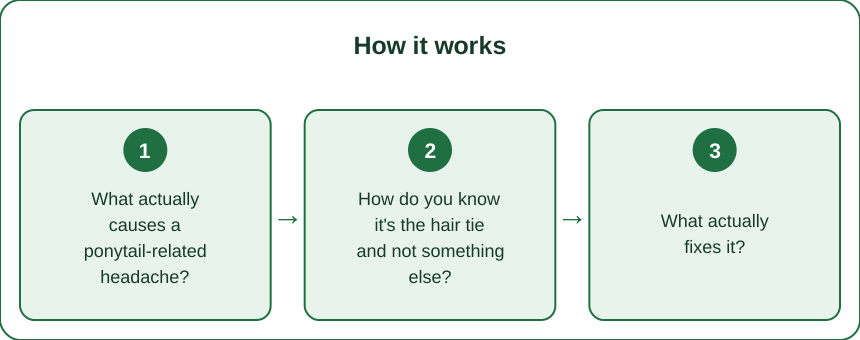
What actually causes a ponytail-related headache?
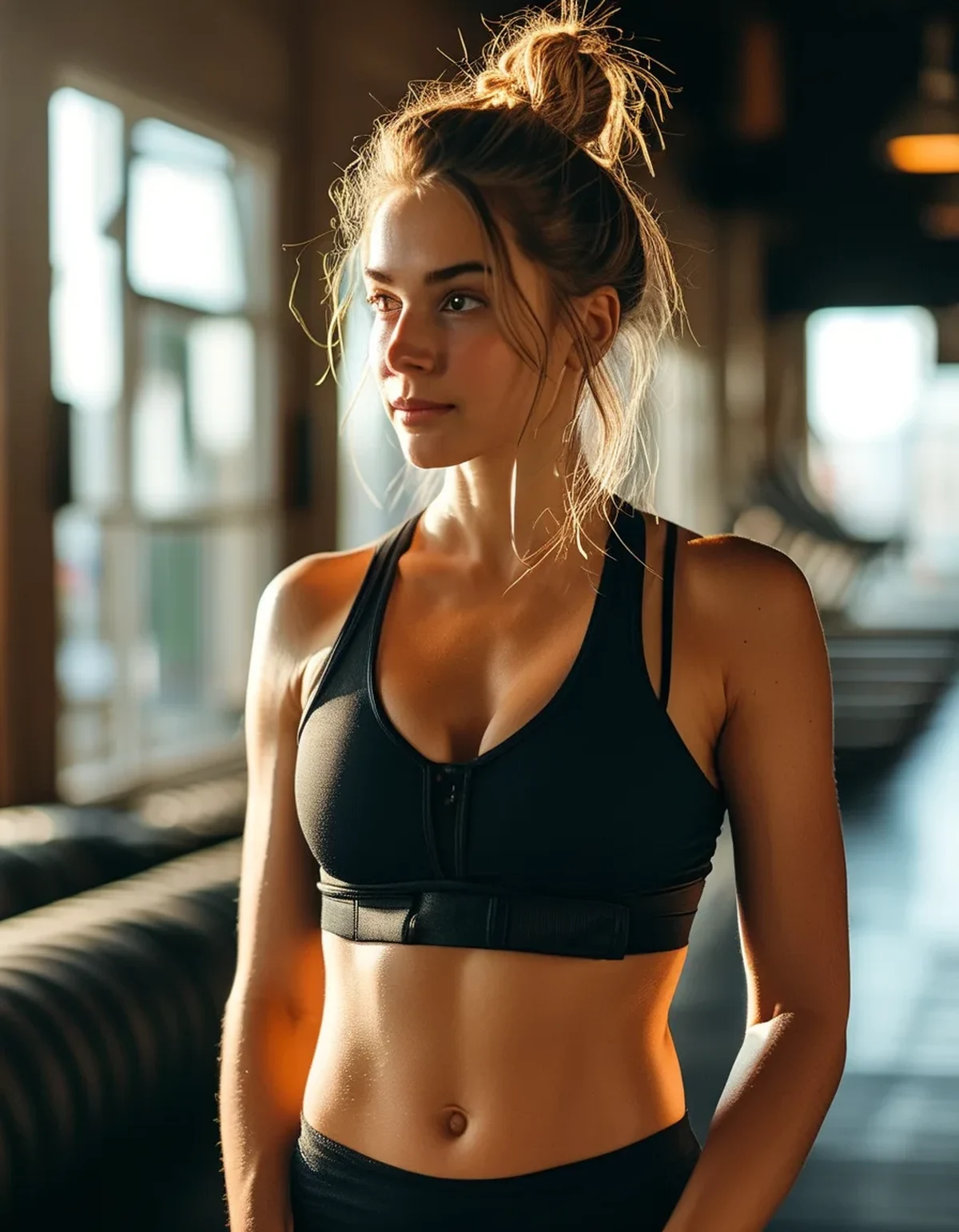
It’s called traction alopecia territory, but the headache version is simpler: a tight tie pulls continuously on hundreds of hair follicles at once, and those follicles are richly connected to nerve endings across your scalp. Sustained pulling — especially from a high, tight ponytail during head movement (running, jumping, direction changes) — irritates those nerves the same way any sustained tension would.
It’s a mechanical, tension-based headache, distinct from a dehydration or exertion headache, which is why drinking more water usually doesn’t touch it.
How do you know it’s the hair tie and not something else?
Three signs point to the tie specifically:
- The headache location is consistent and centers at the back/top of the scalp, not the temples or behind the eyes
- It eases noticeably within a few minutes of loosening or removing the tie
- It correlates with specific styles (high, tight ponytail or bun) more than specific exercises
If loosening your hair mid-workout brings quick relief, that’s a strong confirmation.
What actually fixes it?
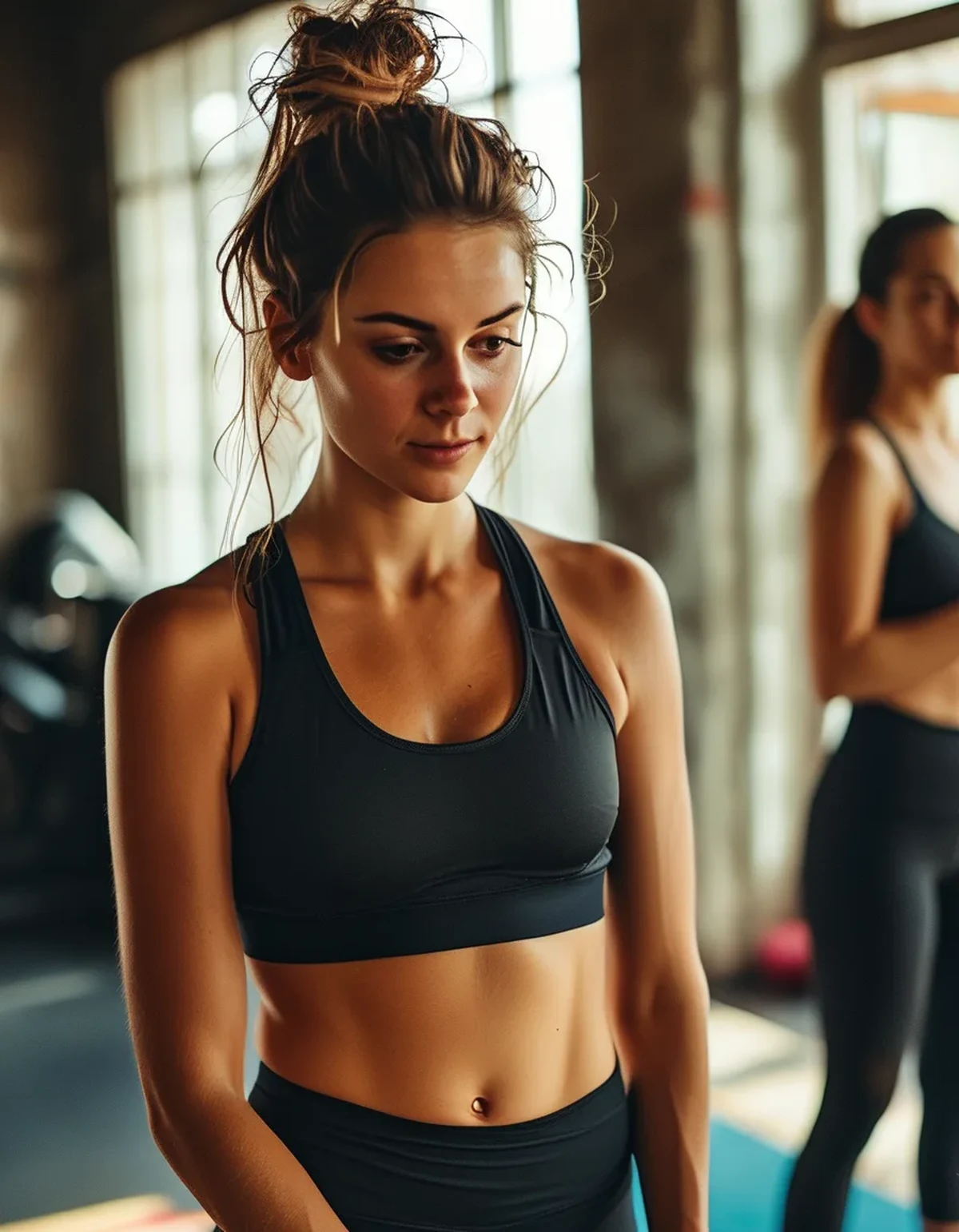
Switch to a wider, flatter tie — thin elastic bands concentrate tension on a smaller area of hair, while wider fabric-covered ties (like scrunchie-style workout ties) distribute the same holding force over more surface area, reducing follicle strain.
Also try a lower ponytail instead of a high one — high ponytails pull hair at a sharper angle relative to the scalp, increasing tension for the same tightness level. And leave just slightly more slack than feels ‘secure’ — most people over-tighten out of fear it’ll fall, when a well-placed lower tie holds fine with less pull.
5 Mistakes That Make Workout Hair Tension Worse
1. Using thin elastic bands for high-intensity movement — they concentrate force instead of spreading it. 2. Double or triple-wrapping the tie thinking tighter is more secure — it multiplies tension, not security. 3. The same high, tight style every single workout — giving follicles zero recovery time between sessions. 4. Ignoring early tension signals — a mild pulling feeling in the first 5 minutes often predicts the headache 20 minutes later. 5. Blaming dehydration by default — masking a mechanical problem with a hydration fix that won’t address it.
FAQ: Workout Hair Tie Headache Questions, Answered
Are claw clips better than hair ties for this?
Often yes for lower-impact workouts — they distribute weight differently and apply less continuous pulling tension, though they can slip during high-impact movement like running.
Could this actually be traction alopecia starting?
A single-session headache isn’t traction alopecia (that’s gradual hair loss from chronic tension over months), but chronic tight styling is a genuine risk factor worth addressing before it becomes that.
Should I just wear my hair down during workouts instead?
For lower-impact sessions (yoga, walking) that can work fine. For anything high-impact, a looser, wider, lower tie is usually the better trade-off between comfort and practicality.
TL;DR:
- A recurring, same-spot headache during workouts is likely tension from your hair tie, not dehydration
- Confirm by loosening your hair mid-workout — quick relief points to the tie
- Wider ties and a lower ponytail placement reduce follicle tension significantly
- Chronic tight styling is also a traction alopecia risk factor worth addressing early
Keep Reading
This article is for general informational and styling purposes only. Fit, sizing, and product availability may vary.