Ponytail Breakage: Why Your Workout Elastic Is the Problem
Quick Answer: The halo of short broken hairs at your crown and hairline is usually mechanical damage: the same elastic, in the same spot, at maximum tightness, gripping hair that is sweat-soaked - and wet hair is at its most fragile and stretchy. The fix stack: rotate placement daily (high, low, braid, clip), switch to spiral coils or silk-wrapped elastics and retire anything with a metal crimp, tie one wrap looser than instinct says, and unwind the band after training instead of ripping it out.
Hair does not break because you work out. It breaks because the workout ponytail is an engineering problem nobody treats as one: a clamp, a lever, sweat, and repetition, applied to the same fifty strands every single day. Change the engineering and the halo grows back out.
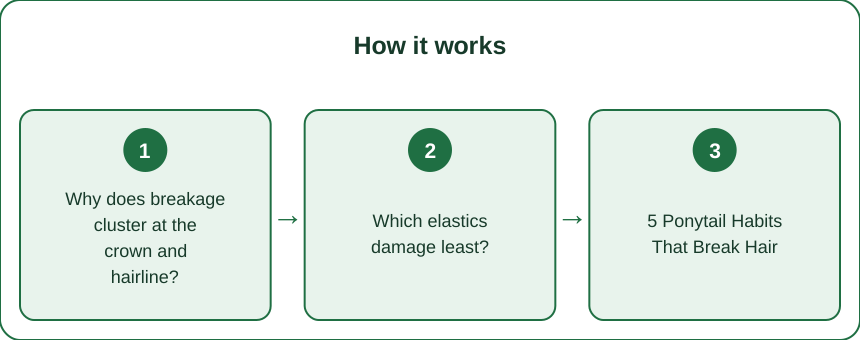
Why does breakage cluster at the crown and hairline?
Because tension is not evenly distributed - it concentrates exactly where the broken hairs are.
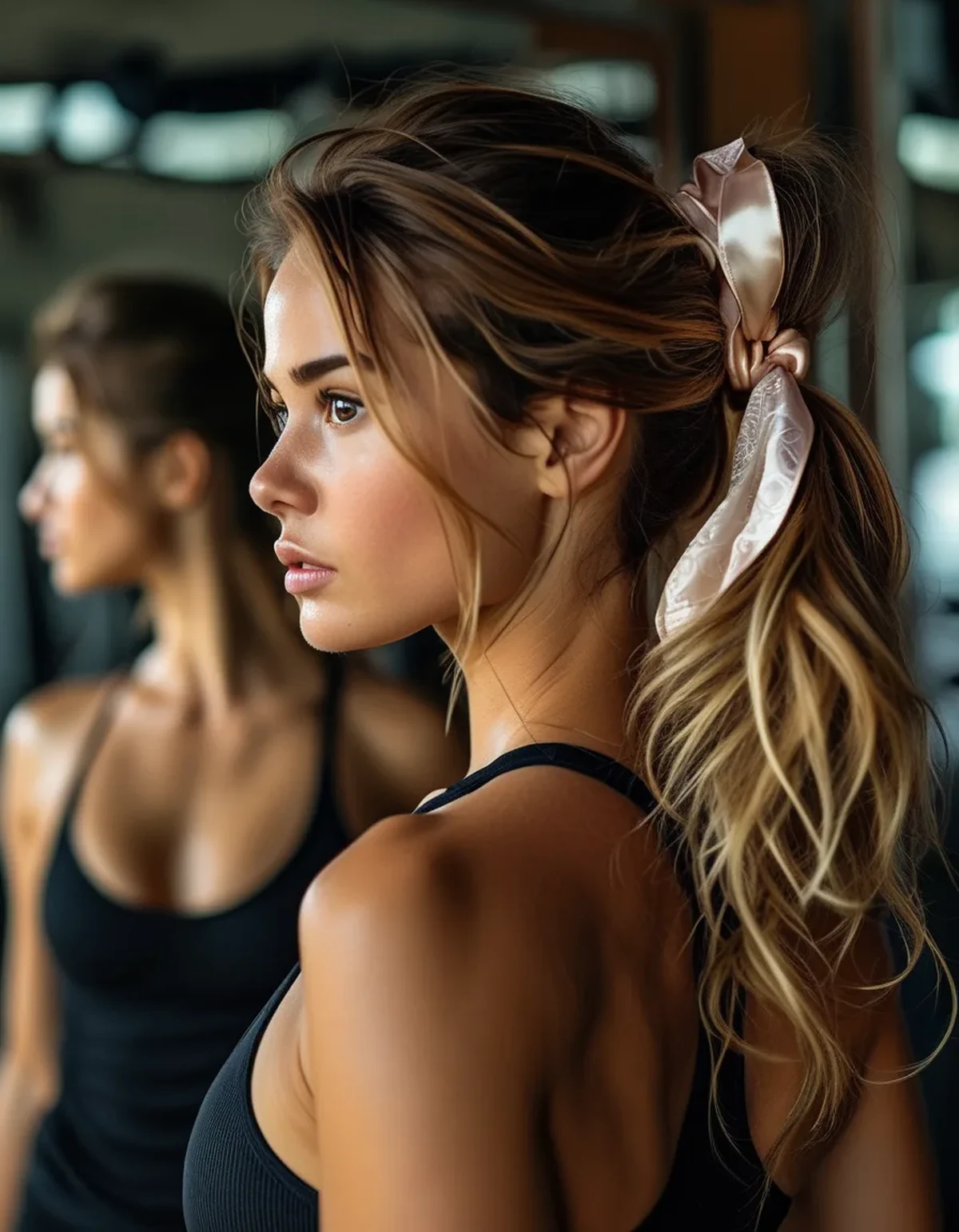
The anchor point takes the load. In any ponytail, the strands at the crown and around the face carry the pulling force of the entire tail - they are the short levers closest to the band. Every bounce of a run or jump rope session tugs at those anchor strands specifically, while the lengths swing free and unbothered.
Same spot, every day, is metal fatigue for hair. A strand bent and tensioned at the same point repeatedly weakens there - the same reason a paperclip snaps after enough bends. The daily high pony recreates the identical stress point hundreds of times per workout, which is why the breakage forms a tidy ring at one height rather than appearing randomly.
Sweat changes the material properties. Wet hair stretches substantially more than dry hair and is markedly more fragile while stretched - the water temporarily disrupts the internal bonds that give hair its strength. A ponytail tied tight on dry hair becomes, forty sweaty minutes later, a clamp on hair at its weakest state, pulled taut by every head movement.
The elastic surface does its own damage. Bare rubber bands grip by friction - which means micro-snagging at every adjustment and removal. Metal crimps are worse: a hard edge pressed into tensioned wet hair is a cutting tool in slow motion.
And the aftermath compounds it. Ripping the band out post-workout, then dragging a brush from crown to ends through sweat-damp tangles, finishes what the tension started. The breakage halo is rarely one villain - it is this whole assembly line, which is good news, because every station on it is fixable.
Which elastics damage least?
There is a clear hierarchy, and matching it to the workout matters more than any single product.
Worst tier: anything with a metal crimp. The exposed joint is a hard edge against wet, tensioned strands. These cost nothing and cost the most; retire them from gym duty entirely.
Next: bare rubber and thin elastic bands. Maximum grip, maximum friction, and the snap-tight thinness concentrates pressure on the narrowest band of hair. Fine for securing a braid’s tail end - the lowest-tension job - and rough everywhere else.
Middle: fabric-covered elastics. The standard soft hair tie. Decent grip, moderate friction, honest performance. The upgrade within this tier is seamless versions - no glued or stitched joint to catch.
Strong tier: spiral coils. The telephone-cord plastic coils distribute pressure across their spiral instead of one tight ring, grip without matting, and release cleanly - hair slides out rather than tearing out. They hold well through running and HIIT, and they leave dramatically less of a crease. Their weakness: very thick or very slippery hair sometimes needs a size up or a double coil.
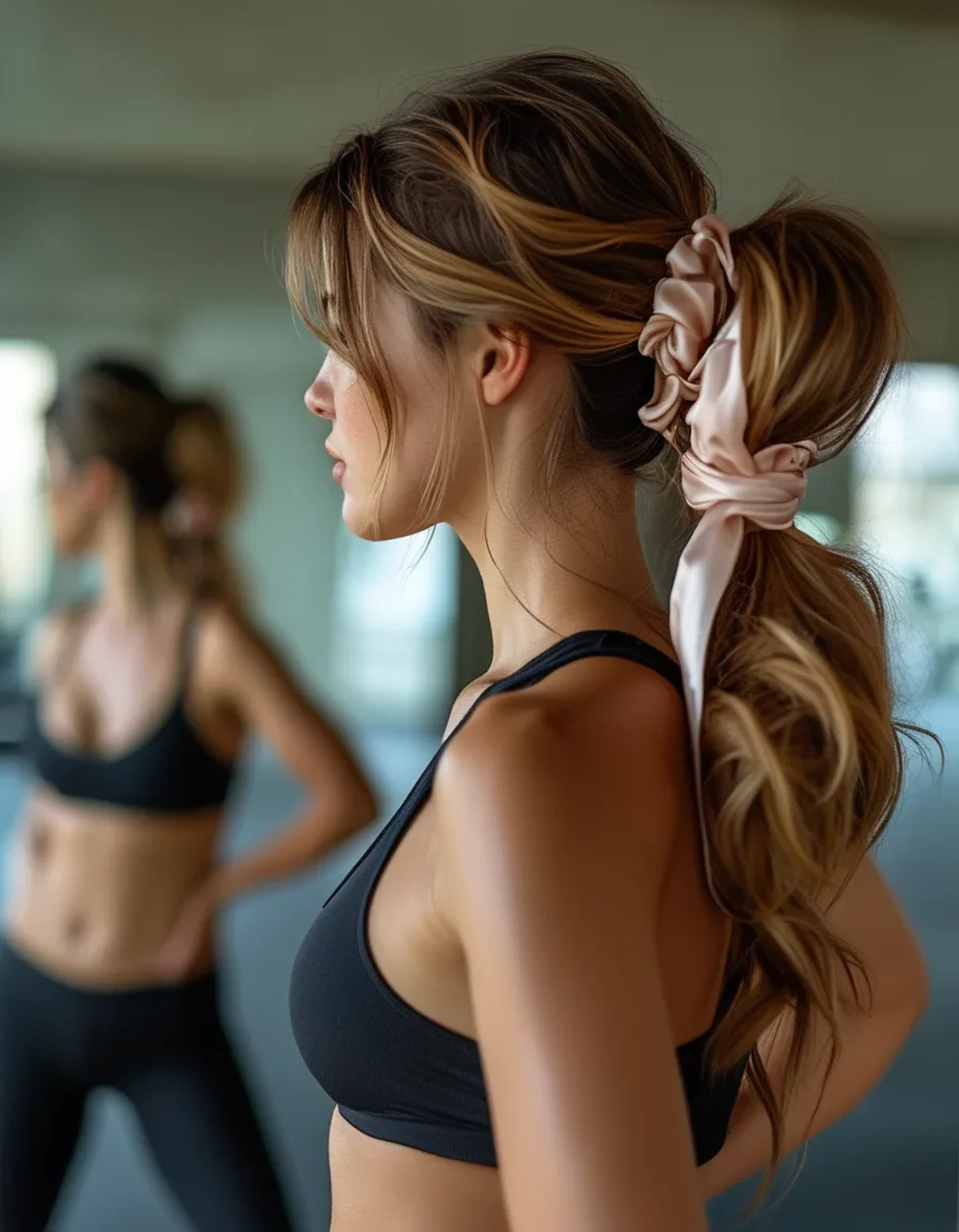
Gentlest tier: silk and satin scrunchies. Lowest friction, kindest surface, and the least secure hold - perfect for lifting, pilates, and yoga, where the head stays mostly upright; optimistic for sprint intervals.
The matching rule does the real work: high-bounce workouts (running, jump rope, HIIT) get a coil plus a braid to distribute load; strength and studio days get the scrunchie; and the all-day style between sessions gets whatever holds at half the tension you would use for burpees. One elastic type for every context is how the same fifty strands end up doing all the work.
5 Ponytail Habits That Break Hair
1. The same placement every single day. The daily high pony concentrates lifetime tension at one crown line. Rotation is the cheapest fix in hair care: high pony today, low tomorrow, braid Thursday, claw clip on lifting day. Each placement moves the anchor point, and no single ring of strands accumulates the fatigue.
2. Tightening mid-workout by splitting the tail. The classic move - splitting the ponytail in two and yanking the halves apart to snug the band - cranks the anchor knot tighter than any deliberate tying would, on hair that is by then sweat-weakened. If the tail loosens mid-session, untie and retie; the ten seconds costs less than the strands.
3. Ripping the elastic out afterward. A gripping band dragged down the tail takes wrapped strands with it - you can hear it. Unwind coils and scrunchies the way they went on; roll tighter elastics down gently with fingers guiding, never a single pull.
4. Brushing soaked hair from the top down. Post-workout hair is at peak fragility, and a brush entering at the crown drives every tangle downward into a knot wall. Detangle from the ends upward, ideally with a wide-tooth comb or wet-specific brush, ideally with a spray of leave-in conditioner first.
5. Going straight from sweaty pony to sleeping bun. Hair that spends the workout, the evening, and the night under tension never gets an unloaded hour. After the post-gym rinse or brush-out, let it hang loose or in the loosest possible braid overnight - the recovery window is when the fatigue stops accumulating.
Bonus: the too-tight baseline. If a ponytail leaves a scalp-ache ring or a visible crease line, it spent the whole session over-tensioned. One full wrap looser than instinct holds almost as well and halves the load - the difference between snug and strained is exactly one twist of the band.
What are the lower-damage styles that survive a workout?
Ranked by how much bounce they can absorb.
For high-impact days: the braid, in any form. A single French or Dutch braid distributes tension continuously along the whole strand instead of concentrating it at one anchor - which is why it is the default for boxers, runners, and anyone with hair past their shoulders. Secure the tail with a coil, and the crown strands carry a fraction of the ponytail’s load. Boxer braids (two Dutch braids) add even distribution for the bounciest sessions.
For medium days: the low pony or low bun with a coil. Lower placement shortens the lever arm - less swing, less tug per stride - and moves the anchor away from the crown ring that daily high ponies have been mining. A low bun wrapped loosely and pinned takes the swing out entirely.
For lifting and studio days: the claw clip or scrunchie bun. Almost zero tension, holds through hinges and presses, releases without a trace. The claw clip is genuinely the least damaging hold in the gym - its only failure mode is lying back on a bench, where a quick reposition to the side solves it.
For the hairline specifically: a soft headband over a looser tie. Baby hairs and face-framing strands get contained by the band instead of yanked by the elastic, which removes the second breakage zone entirely.
And two support habits finish the system: a quick spritz of leave-in or a drop of lightweight oil on the tie line before securing reduces friction where the band grips; and on non-wash days, aim the dryer’s cool setting at the roots for two minutes post-workout - getting the anchor zone from soaked to damp restores most of hair’s strength before it goes back under any tension.
The pattern across all of it: distribute, lower, loosen, rotate. Any style that does two of those four is already saving the crown.
FAQ: Workout Hair Breakage Questions, Answered
Why is my hair breaking only at the top of my head?
Because the crown strands are the anchor of every ponytail - they carry the tail’s full pulling force, bent over the elastic at the same spot daily, usually while sweat-soaked and at their weakest. That combination produces the classic breakage halo. Rotating styles and placements so no single ring of hair anchors every workout is the core fix.
Are spiral coil ties actually better for your hair?
Meaningfully, yes - the coil distributes pressure along its spiral instead of one tight ring, grips without matting, and slides out instead of tearing out. They also leave far less of a crease. Silk scrunchies remain gentler still but hold less; the practical system is coils for bounce days, scrunchies for strength and studio days.
How tight should a workout ponytail be?
One full wrap looser than your instinct. If it aches at the scalp, leaves a crease line, or lifts the skin at your temples, it is over-tensioned and loading the anchor strands all session. A braid or lower placement buys the security you were chasing with tightness, without the tension bill.
Should I redo my ponytail right after the gym?
Release it, yes - unwind the band gently, detangle from the ends up, and get the roots from soaked to damp (cool dryer setting or air) before any new style goes in. What you should not do is rip the elastic out, brush from the crown down through wet tangles, or move straight into a tight bun. The post-workout hour is when hair is weakest and when most of the visible damage actually happens.
TL;DR:
- Breakage clusters at the crown because those strands anchor every ponytail - same spot, max tension, sweat-weakened.
- Retire metal-crimp and bare rubber bands; run coils for bounce days, silk scrunchies for strength days.
- Rotate placement daily - high, low, braid, clip - so no single ring of hair takes every workout.
- Tie one wrap looser, never split-and-yank mid-session, and unwind bands instead of ripping.
- Post-gym: detangle ends-first, dry the roots to damp, and give hair one loose recovery stretch overnight.
The halo of broken hairs was never a hair-quality problem. It was a load-bearing problem - and load problems are solved by engineers, not serums.
Keep Reading
This article is for general informational and styling purposes only. Fit, sizing, and product availability may vary.