The Sweaty Scalp: Keeping the Skin Under Your Hair Healthy Through Training
Quick Answer: Your scalp is skin, and it needs the same post-workout treatment your face gets. After a heavy sweat, rinse the scalp with water even if you’re not shampooing, dry it rather than tying it up damp, and cap dry shampoo at 2–3 applications before a real wash. Most itchy, flaky, sweaty-scalp complaints are buildup, not a disease — sweat salts plus sebum plus product residue sitting at the roots.
You’d never wash your face once a week. You’d never work out, sweat through your makeup, and then just… leave it, under a hat, for two days.
But that’s the standard treatment the skin under your hair gets, and then people wonder why it itches by Thursday.
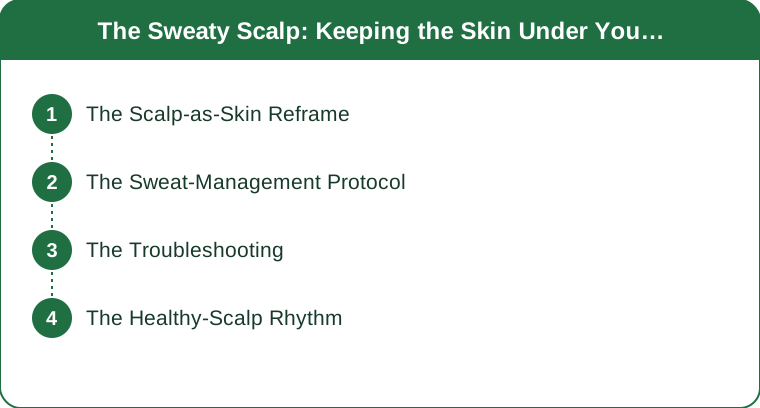
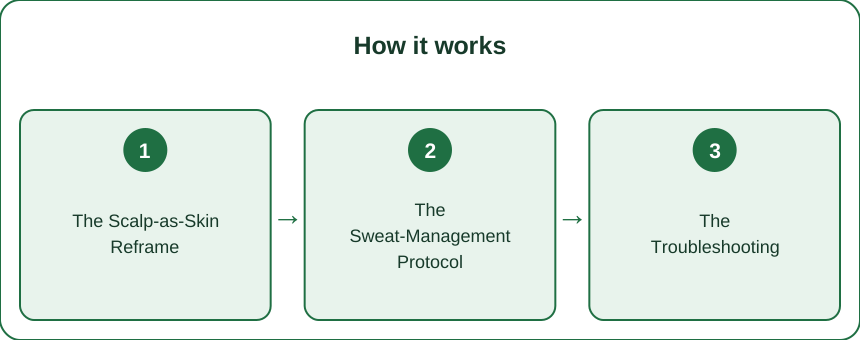
Your scalp is skin — the reframe
The scalp has sweat glands, sebaceous glands, a microbiome, and a barrier function, exactly like the skin on your face. It just happens to be covered in hair, which does two inconvenient things: it hides the skin from view, and it traps everything against it.
Here’s the tension that makes active-person scalp care confusing:
Your lengths want infrequent washing. All the wash-less advice — for curly hair, for color-treated hair, for dry ends — is about protecting the hair shaft from being stripped.
Your scalp on a training week wants attention. Salt residue, sebum, and product buildup at the roots.
Two zones, opposite needs, one shower. Most people resolve this by picking a side and then having a problem at the other end.
The resolution is that “attention” doesn’t have to mean shampoo.
What’s actually building up there
Sweat salts. Sweat is mostly water, which evaporates. What stays is salt and trace minerals, and it’s mildly irritating when it sits.
Sebum. Your scalp produces more oil than most of your skin, and a hat or headband traps it.
Dry shampoo. Starches and alcohols designed to absorb oil. They do their job and then stay there.
Styling product. Anything applied near the roots.
Layer all four across a four-workout week without a real rinse and you get the classic complaint: itchy, sometimes flaky, occasionally spotty. That’s a buildup story, not a disease story, and it responds to a routine change.
The sweat-management protocol
1. The post-sweat rinse. After heavy sessions, 60 seconds of plain water at the scalp with fingertips working through. No shampoo, no time cost worth mentioning. This dilutes sweat before it dries and sets, and it’s the single highest-value habit here.
2. Wash the roots, not the lengths. When you do shampoo, put it at the scalp and massage with fingertips (not nails) for 30–60 seconds. The runoff cleans your lengths perfectly well. This gives the scalp a real clean while sparing your ends.
3. Dry shampoo discipline. Roots only, held 8–10 inches away, and worked in after two minutes. Cap it at 2–3 applications before a real wash. Dry shampoo defers washing; it doesn’t replace it, and treating it as a cleaner is how buildup becomes a problem.
4. Dry it properly. Don’t tie a soaking scalp into a bun and leave it for three hours. Damp warmth under tension is the condition scalp irritation likes best.
5. Wash your gear. Headbands, caps, and helmet liners soak up sweat and sit against the hairline. An unwashed headband re-inoculates the exact skin it covers. Rotate two and wash them weekly.
Troubleshooting the four common complaints
Itchy and flaky. Usually buildup or dryness. Try a clarifying wash once a month plus a proper moisturizing conditioner on the lengths. If it’s persistent, greasy-looking, inflamed, or yellowish rather than dry and white, that’s more likely a seborrheic pattern — which responds to actual medicated treatment, not to more washing.
Breakouts along the hairline. This is acne mechanica: sweat, plus product, plus friction from a cap or headband. Audit what you put near your hairline before training, cleanse the edges of your face and hairline right after, and swap to a clean headband each session.
Color fading faster. Sweat and frequent rinsing both pull color. Rinse in cool water rather than hot, and time your washes to your sweatiest days rather than washing on autopilot.
Panic at the shedding in the drain. Training doesn’t cause hair loss. What happens is that if you wash less often, several days of normal shedding — which is typically 50–100 hairs a day — arrives in the drain at once and looks alarming. Genuine, persistent thinning or a widening part is a different matter and belongs to a professional.
5 mistakes everyone makes with a sweaty scalp
1. Scratching with fingernails in the shower. It feels incredible and damages the barrier. Fingertips only.
2. Using hot water because it feels cleaner. Hot water strips more and leaves the scalp drier, which drives more oil production. Warm, then a cool rinse.
3. Applying conditioner at the roots. Conditioner belongs from the ears down. At the scalp it’s just more buildup.
4. Reaching for a stronger shampoo when it itches. If the itch is dryness, harsher shampoo makes it worse. Clarify once, then moisturize — don’t escalate weekly.
5. Never washing the hat. The number of people doing careful scalp care and then putting on a three-week-old cap is high.
The weekly rhythm
Align wash days to your sweatiest sessions. Long run Saturday? Wash Saturday. Don’t wash Friday on a schedule and then sweat heavily the next day.
Two minutes of scalp massage on wash day. Fingertips, circular, before you rinse the shampoo. It loosens buildup and feels good. The evidence for massage driving hair growth is modest, so treat that as a bonus rather than the reason.
Clarify monthly. One clarifying wash resets the accumulation your regular routine misses. Follow it with a deep conditioner on the lengths, because clarifying shampoo strips thoroughly.
Flex with the season. Summer means more sweat and more rinses. Winter’s dry indoor air means a drier scalp and often fewer washes with more moisture.
When to see a professional
See a dermatologist for flaking that persists after four weeks of routine changes, an itch that disrupts sleep, painful or spreading bumps, redness with yellowish greasy scale, patchy hair loss, or noticeable thinning and a widening part. Those are medical scalp conditions with real treatments — continuing to experiment with shampoos just delays a fix.
FAQ
Is sweating bad for your scalp?
No — sweating itself is normal and even helps clear the follicle. What causes problems is sweat left to dry and concentrate on the scalp for hours, especially under a hat, combined with product buildup. A quick water rinse solves most of it.
How do you clean your scalp without washing your hair?
Rinse with plain water and work your fingertips through the roots for about 60 seconds. If you can’t shower, use a micellar water or scalp wipe along the part line and hairline, then do a proper rinse that evening.
Why does my scalp itch after working out?
Most often it’s sweat salts and product buildup, sometimes combined with a barrier that’s dry from over-washing. Increase plain-water rinses, reduce dry shampoo, and clarify once a month. If it’s still itching after a few weeks, get it looked at rather than trying a fifth shampoo.
TL;DR:
- The scalp is skin — apply face-care logic, not just hair-care logic.
- Your lengths want fewer washes; your scalp on a training week wants attention. Rinsing solves both.
- 60-second plain-water rinse after heavy sweat is the highest-value habit here.
- Shampoo the roots with fingertips; let runoff handle the lengths.
- Dry shampoo caps at 2–3 applications before a real wash.
- Wash your headbands and caps — an unwashed one re-inoculates the hairline.
- Persistent flaking, painful bumps, or real thinning is a dermatologist visit, not a shampoo swap.
Keep Reading
This article is for general informational and styling purposes only. Fit, sizing, and product availability may vary.