Chlorine vs Your Hair: The Swimmer's Protection Protocol
Quick Answer: Rinse your hair in clean water for 30 seconds before you get in the pool — saturated hair can’t absorb much chlorinated water. Then work a palmful of cheap conditioner through it and put on a silicone cap. Rinse again immediately after swimming, and use a clarifying shampoo once a week. The green tint on blonde hair is copper from the water, not chlorine.
Swimming is close to a perfect workout, and it comes with exactly one tax: your hair.
The good news is that the tax is largely optional. Three minutes of preparation prevents more damage than any repair product undoes afterward — and the whole ritual costs about four dollars in conditioner.
Why Does Chlorine Wreck Hair?
Two mechanisms, and they compound over a swimming season.
Chlorine strips the natural oils that coat each strand. Without that film, the cuticle — the overlapping outer layer — lifts and roughens. Rough cuticles catch on each other, which is exactly the straw texture and tangling that regular swimmers describe.
Porous hair drinks more of it. Hair that’s already been colored, heat-styled, or chemically treated has a more open cuticle to begin with, so it absorbs pool water faster and holds onto it longer.
And the green thing deserves a correction, because it gets blamed on the wrong chemical constantly. The green tint on light hair is copper, which comes from pool pipes and algaecides, oxidizing on the hair. Chlorine helps the process along, but the copper is the pigment.
What’s the Pre-Swim Ritual?
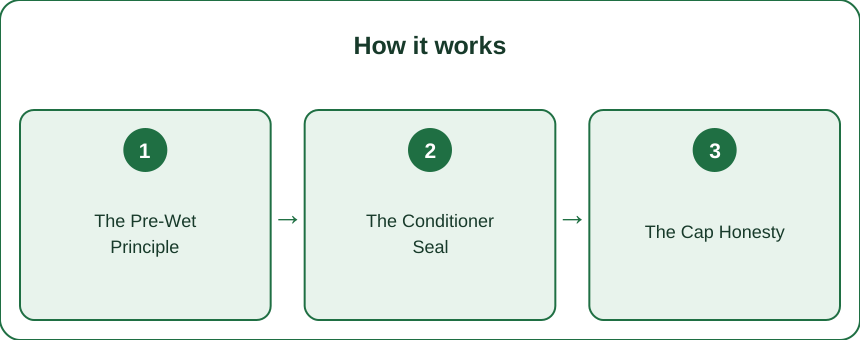
Three steps, about 90 seconds total, and the first one does most of the work.
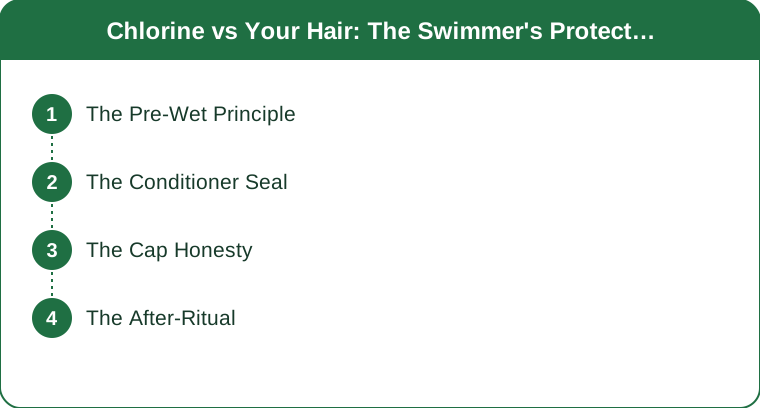
1. Pre-wet with clean water — 30 seconds. Hair is essentially a sponge. Soak it thoroughly in the shower first and it has very little capacity left to absorb pool water. This is physics doing the protecting, and it’s the single highest-value step in swim hair care.
2. Add conditioner — 20 seconds. A palmful of any cheap conditioner, worked from mid-length to ends. It forms a sacrificial barrier, so the chlorine spends itself on the conditioner layer instead of your strands. Leave-in or regular both work; don’t waste the expensive stuff here.
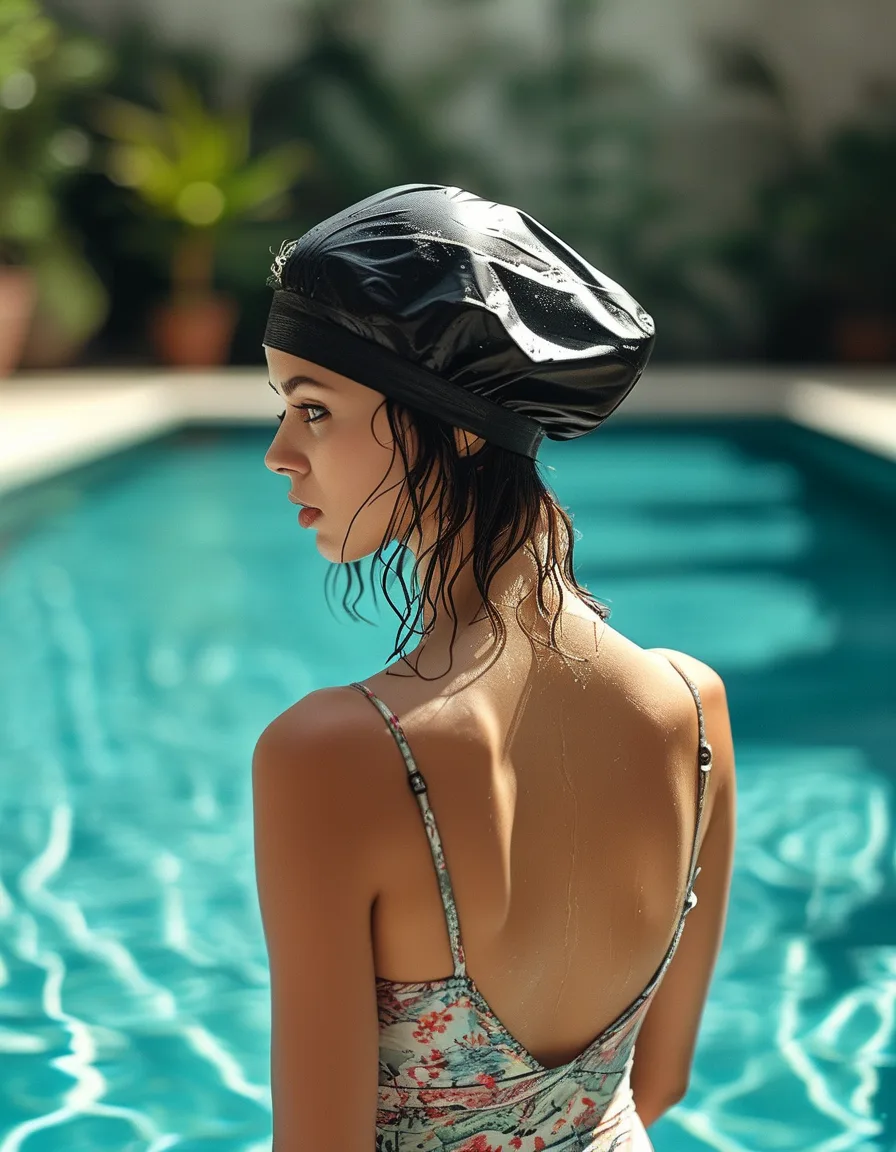
3. Cap up. Braid long hair first, then cap. Silicone caps beat latex for comfort, coverage, and not pulling your hair out on removal.
Be honest about what a cap does: it keeps hair contained and mostly dry, not hermetically sealed. Water gets in around the edges on every swim. The pre-wet and conditioner underneath are what handle what seeps through, which is why the cap is the third step rather than the only one.
What Should You Do After Swimming?
Rinse immediately. Chlorine keeps reacting for as long as it sits on your hair, so the walk from pool to shower is the part that matters. Even 30 seconds of plain water at the poolside shower is far better than waiting until you get home.
Shampoo and condition properly in the shower afterward. A gentle shampoo is fine for daily rinsing.
Clarify once a week if you swim regularly — 3 or more sessions. A clarifying or chelating shampoo removes the mineral buildup that a normal shampoo leaves behind, including the copper responsible for the green tint. Once a week is enough; more than that gets drying.
Deep condition weekly. A mask left on for 5 to 10 minutes keeps the moisture ledger balanced against what the pool takes out.
5 Mistakes Everyone Makes With Swim Hair
1. Skipping the pre-wet because you’re already in a rush. It’s 30 seconds and it’s the most effective thing on this list. If you only do one step, do this one.
2. Using an expensive conditioner as the barrier layer. It’s going to wash straight into the pool. Buy the cheapest large bottle you can find and keep it in your swim bag specifically for this.
3. Wearing a cap over dry hair. A cap on dry hair means the water that seeps in gets absorbed instantly by hair with full capacity. Cap over pre-wet, conditioned hair, always.
4. Assuming a purple shampoo fixes the green. Purple shampoo counteracts yellow tones, not green. You need a chelating or clarifying shampoo to remove the copper causing it.
5. Waiting until home to rinse. The 20-minute drive is 20 minutes of continued chemical contact. Poolside shower, always, even if it’s brief.
The third one is the most common — plenty of regular swimmers cap up dry and wonder why their hair still feels like straw.
Mini FAQ
Does a swim cap fully protect your hair from chlorine?
No. Caps reduce exposure substantially but water always seeps in at the edges. Combine a cap with the pre-wet and conditioner steps for meaningful protection — the cap alone isn’t enough.
Why does chlorine turn blonde hair green?
It’s copper in the pool water, not the chlorine itself. Copper from pipes and algaecides oxidizes and binds to the hair. A chelating or clarifying shampoo removes it; purple shampoo won’t.
How often should swimmers wash their hair?
Rinse after every swim, but you don’t need to shampoo every time — plain water plus conditioner works for daily swimmers. Use a clarifying shampoo weekly and a deep conditioning mask weekly.
TL;DR:
- Pre-wet with clean water for 30 seconds — saturated hair absorbs far less pool water.
- Add cheap conditioner as a sacrificial barrier, then cap. Silicone over latex.
- A cap contains hair; it doesn’t seal it. The layers underneath do the real work.
- Rinse immediately after swimming — chlorine keeps working while it sits.
- Clarify weekly to remove copper buildup (that’s what causes the green, not chlorine).
Three minutes of ritual and the laps stop invoicing your hair.
Keep Reading
This article is for general informational and styling purposes only. Fit, sizing, and product availability may vary.