Is Your Workout Ponytail Too Tight? The Hair Loss Risk Nobody Mentions
Quick Answer: Repeated tight ponytails, especially in the same spot every workout, can cause traction alopecia — gradual hair thinning at the hairline and temples from sustained pulling tension. Alternating part placement, loosening tension slightly, and choosing fabric-covered hair ties reduces the risk significantly.
A secure ponytail matters for a hard workout, but ‘secure’ and ‘as tight as possible in the exact same spot every single time’ are not the same requirement.

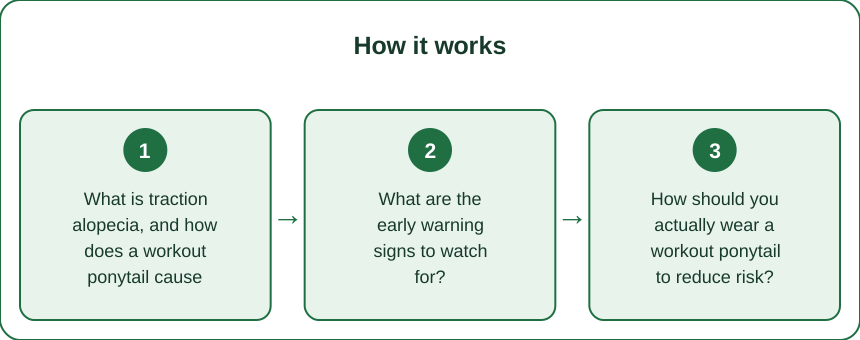
What is traction alopecia, and how does a workout ponytail cause it?
Traction alopecia is hair loss caused by sustained mechanical tension on hair follicles, most often from consistently tight hairstyles pulling in the same direction over time. A daily high, tight workout ponytail applies repeated pulling stress to the same follicles at the hairline and temples — the areas most vulnerable because the hair there is naturally finer and the follicles sit more superficially.
Unlike some hair loss causes, traction alopecia is largely preventable and often reversible if caught early, since the follicles themselves aren’t destroyed — they’re just under chronic strain.
What are the early warning signs to watch for?
Small bumps or redness at the hairline where the tie sits repeatedly, a headache-like tension feeling at the end of a ponytail-heavy day, and visible thinning or a receding pattern specifically at the temples and hairline — as opposed to overall thinning, which usually points to a different cause entirely.
Catching these signs early and adjusting habits typically allows regrowth; waiting until thinning is significant reduces the odds of full recovery.
How should you actually wear a workout ponytail to reduce risk?
Alternate the part and ponytail placement day to day — a slightly different angle changes which follicles bear the tension, spreading the load rather than concentrating it in one spot session after session.
Use fabric-covered elastics rather than thin rubber bands, which grip hair less aggressively and cause less localized breakage and pulling.
Loosen the tie slightly — secure enough not to bounce loose mid-workout, but not pulled to the point of visible scalp tension or a headache-like feeling at the hairline.
Does hairstyle choice matter beyond just the ponytail?
Braids worn tightly and consistently in the same style carry a similar traction risk to ponytails, while looser styles — a low bun, a loose braid, or simply switching between a few different styles across the week — distribute tension more evenly. Variety across the week matters more than any single ‘perfect’ style.
FAQ: Workout Ponytails and Hair Loss, Answered
Is a little tension from a ponytail always bad?
No — occasional tight styling is generally fine. The concern is chronic, daily tension in the exact same spot over months or years.
Can traction alopecia be reversed?
Often yes, if caught in the early stages and tension habits change — established, longer-term follicle damage is harder to reverse and may need a dermatologist’s input.
Should I switch to a low ponytail instead of a high one?
Low ponytails generally place less direct tension on the hairline specifically, though any consistently tight style in the same spot carries some risk — variety matters more than any single position.
TL;DR:
- Repeated tight ponytails in the same spot can cause traction alopecia at the hairline and temples
- Watch for bumps, tension headaches, or thinning specifically at the hairline as early signs
- Alternate part and ponytail placement, use fabric-covered ties, and loosen tension slightly
- Caught early, traction alopecia is often reversible — don’t wait for visible thinning to adjust habits
Switch up your ponytail placement this week — a small, free habit change that meaningfully reduces long-term hairline strain.
Keep Reading
This article is for general informational and styling purposes only. Fit, sizing, and product availability may vary.