Why Air Drying After the Gym Can Damage Hair More Than Heat
Quick Answer: Air drying is not automatically gentler. A wet strand swells with water, and the longer it stays swollen, the more the cuticle is stressed - a process called hygral fatigue. Hair left damp for 2 or more hours, especially tied up or under a hat, gets more cumulative stress than a medium-heat blow dry with protectant for 6 to 8 minutes. The gentlest option is usually a fast, low-heat dry to about 80% and air drying the rest.
The habit is almost universal: shower, twist it up, get on with the day. Then the breakage shows up two months later and nobody connects it to the ten minutes saved.
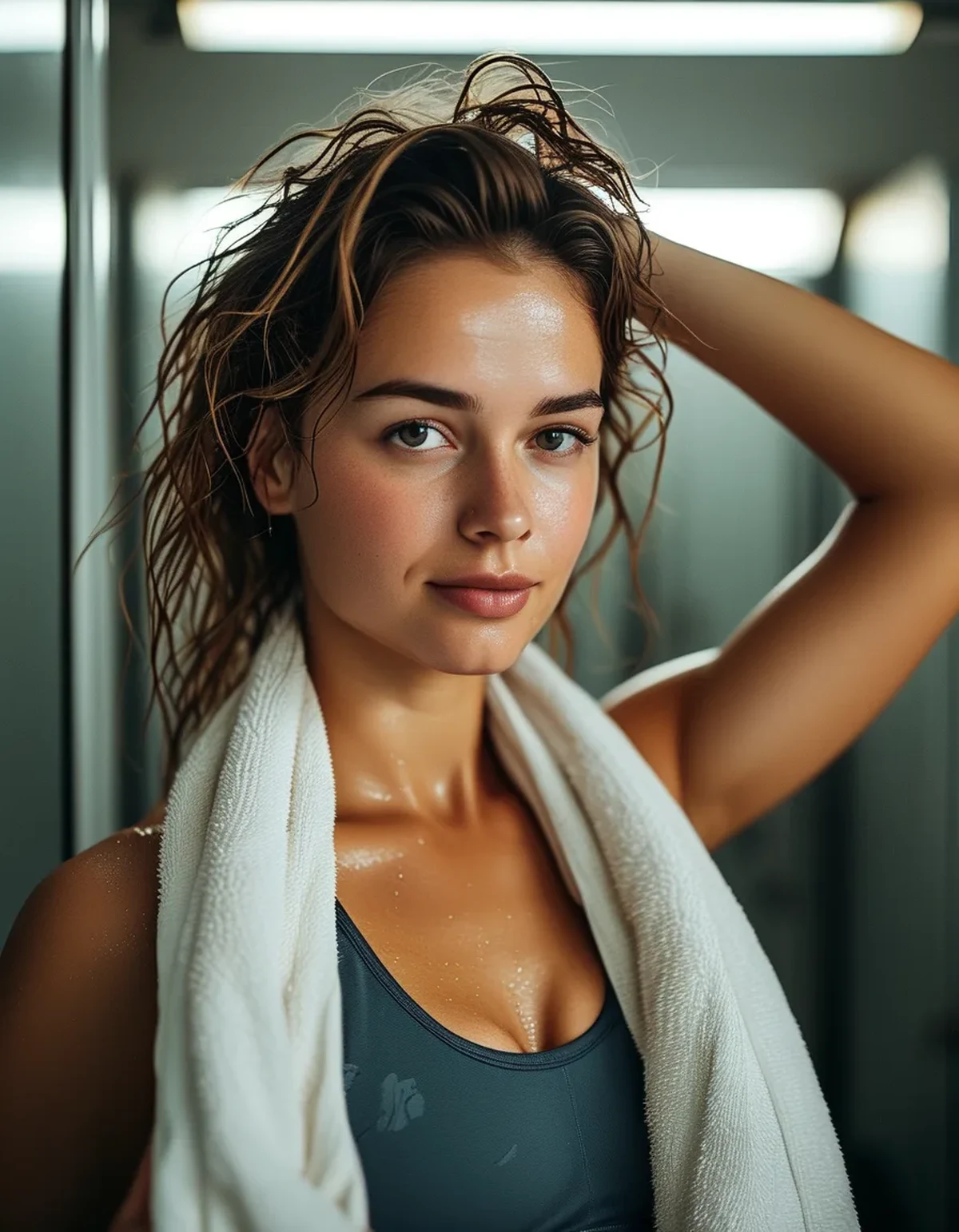
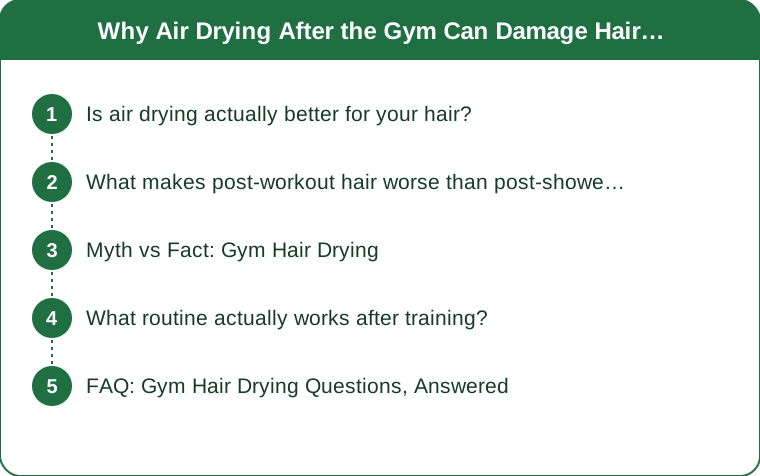
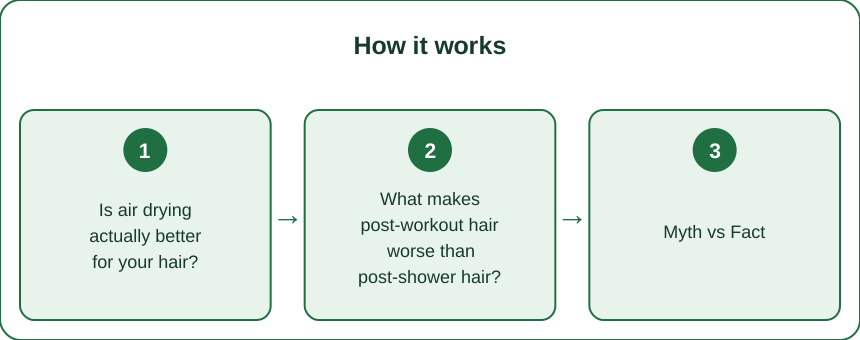
Is air drying actually better for your hair?
Only up to a point, and that point is shorter than most people assume.
Water makes hair swell. A strand absorbs water into its cortex and expands by up to 15% in diameter. When it dries, it contracts again. That swell-and-shrink cycle is normal once or twice - it is what happens every time you wash.
The damage is in how long it stays swollen. Prolonged saturation is what researchers call hygral fatigue: repeated or extended swelling that gradually lifts the cuticle and weakens the strand’s internal bonds. Hair that stays wet for three hours after every training session is doing this five or six times a week.
Wet hair is also mechanically weaker. A saturated strand stretches more easily and snaps at a lower load than a dry one. This is why the comb that glides through dry hair rips through wet hair, and why the ponytail you tie while damp does more damage than the same ponytail tied dry.
Heat is not harmless either - it is simply a different kind of stress, and a controllable one. Medium heat, held moving, at a hand’s width from the head, with a protectant, is a known and limited exposure. Six hours of damp hair under a hat is an unlimited one.
The practical version: if your hair is dry within about 45 minutes on its own, air drying is fine. If it takes three hours, you are not choosing the gentle option - you are choosing the slow one.
What makes post-workout hair worse than post-shower hair?
Sweat, friction, and the fact that gym hair almost never gets to dry loose.
Sweat leaves salt behind. As sweat evaporates, salt crystals stay on the strand and in the scalp. Salt is mildly abrasive and drying, and hair that dries with salt still on it feels rougher and tangles more than hair that dried clean.
Hair is usually tied when it dries. A damp ponytail dries into a permanent bend at the elastic, and that bend is a weak point. Combine a swollen wet strand, a tight elastic, and hours of drying time, and you have manufactured the exact conditions for mid-length breakage.
Hats and hoods trap moisture. Anything that covers wet hair extends drying time and keeps the scalp warm and damp - which is a reasonable description of the conditions that make scalps itch and flake.
Friction happens while the strand is vulnerable. Wet hair rubbing against a jacket collar, a bag strap, or a car seat is friction against a strand at its weakest. The collar-line breakage that many people blame on their coat is usually a wet hair problem.
And the cycle repeats daily. Once-a-week wet hair is a non-issue. Five or six times a week for months is a cumulative load, and cumulative loads are what produce the frayed mid-lengths people notice in autumn.
Myth vs Fact: Gym Hair Drying
Myth: heat is the main cause of hair damage. Fact: mechanical damage - brushing, tying, friction, especially while wet - accounts for far more everyday breakage than moderate heat styling with protection. Heat gets blamed because its damage is dramatic when it happens; friction damage accumulates too quietly to notice.
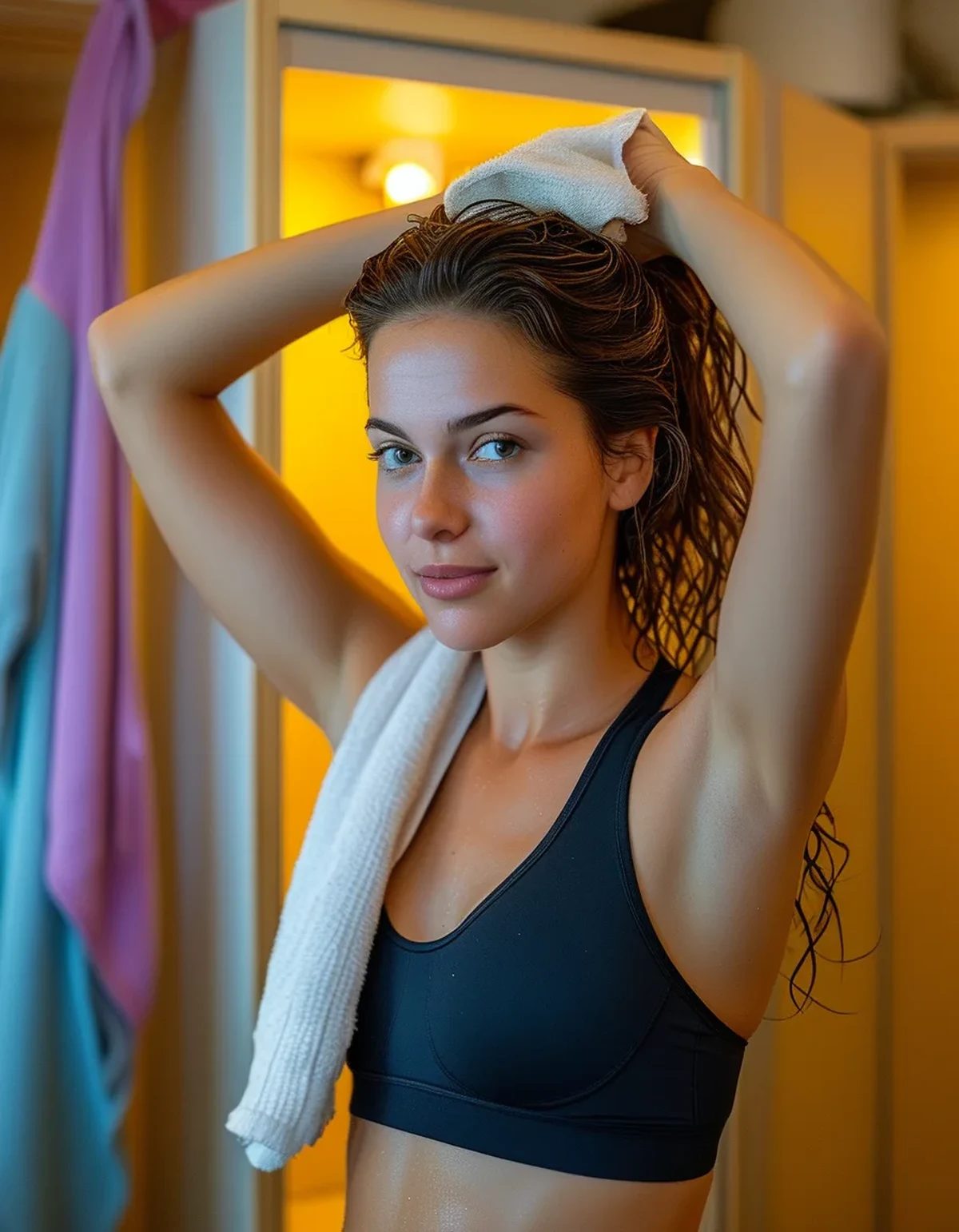
Myth: towel drying vigorously helps it dry faster. Fact: it roughs up the cuticle at the moment it is most open. Squeeze and blot with a microfiber towel or cotton t-shirt rather than rubbing; you remove nearly as much water with a fraction of the friction.
Myth: you should brush hair out as soon as you shower so it dries smooth. Fact: brushing saturated hair is the single highest-risk moment. Detangle with fingers or a wide-tooth comb, starting at the ends, and save the brush for when it is at least 70% dry.
Myth: cool air is completely safe, so use a dryer on cold. Fact: cool air is gentle on the cuticle but slow, which extends the swelling window. Low or medium warm air is usually the better compromise - it shortens saturation time without cooking the strand.
Myth: leave-in conditioner makes hair take longer to dry. Fact: a light leave-in with a mild silicone or a plant oil actually reduces water uptake on the next wash and cuts drying time slightly, while adding slip that reduces tangling.
What routine actually works after training?
A five-step version that adds about four minutes and removes most of the risk.
1. Rinse the salt, even if you are not washing. A plain water rinse removes most sweat salt. You do not need to shampoo every session - over-washing is its own problem, and a rinse plus conditioner on the mid-lengths is enough for most training days.
2. Blot, do not rub. Squeeze water out with a microfiber towel or a cotton t-shirt. Ninety seconds of blotting removes a surprising amount and cuts total drying time noticeably.
3. Apply a leave-in and detangle with fingers. A pea-sized amount through the ends, then fingers or a wide-tooth comb from the bottom up. Never a brush at this stage.
4. Dry to about 80% with medium heat. Keep the dryer moving, a hand’s width away, with heat protectant if you use heat regularly. This is the step that closes the saturation window, and it is the whole point - you are not styling, you are getting the water out.
5. Leave it down for the last 20%. Tying hair while it is still damp sets a bend and traps moisture at the elastic. If you must tie it, use a coiled or silk-covered elastic and keep it loose.
If you have no dryer access at the gym: blot thoroughly, apply a leave-in, and leave hair loose for the commute rather than putting it straight into a bun under a hood. The difference is not subtle.
FAQ: Gym Hair Drying Questions, Answered
How long is too long to leave hair wet?
As a working rule, more than about two hours of genuine dampness, repeated most days of the week, is where the cumulative swelling starts to matter. Occasional long air dries are not a problem.
Is sleeping with wet hair bad?
It is the worst version of the problem: hours of saturation combined with pillow friction and compression. If you train in the evening, dry to at least 90% before bed, and use a silk or satin pillowcase to reduce friction.
Does curly hair follow the same rules?
Curly and coily hair is more prone to hygral fatigue because it absorbs more water and dries more slowly, but it also relies on water for definition. The usual compromise is a leave-in plus a diffuser on low heat, which shortens drying time without disrupting the curl pattern.
Do I need to wash my hair after every workout?
Most people do not. Rinse with water and condition the mid-lengths after most sessions, and use shampoo two or three times a week or when the scalp actually feels dirty - more if you have a very oily scalp or use heavy styling products.
TL;DR:
- Air drying is not automatically gentler - prolonged saturation (hygral fatigue) stresses the cuticle, and wet hair is mechanically weaker.
- Post-workout hair is worse because of salt, tight elastics, hats, and friction during the vulnerable wet window.
- Blot rather than rub, detangle with fingers, dry to about 80% on medium heat, and let the last 20% finish loose.
- Never brush or tightly tie soaking hair; never sleep on it.
The reframe is simple: the goal is not avoiding heat, it is shortening the time your hair spends swollen and fragile. A short, controlled dry beats three hours in a damp bun almost every time - and the mid-length breakage that shows up at the end of a heavy training summer is usually the accumulated cost of choosing the bun.
Keep Reading
This article is for general informational and styling purposes only. Fit, sizing, and product availability may vary.