Hair Breakage From Training (The Damage Happens Between Sessions)
Hair breakage in people who train regularly rarely comes from the training itself — it comes from the tight ponytail worn in the same place daily, the friction of a hood, and taking the whole thing down while it is still damp. Here is why training breaks hair, where it actually happens, and how to prevent it.

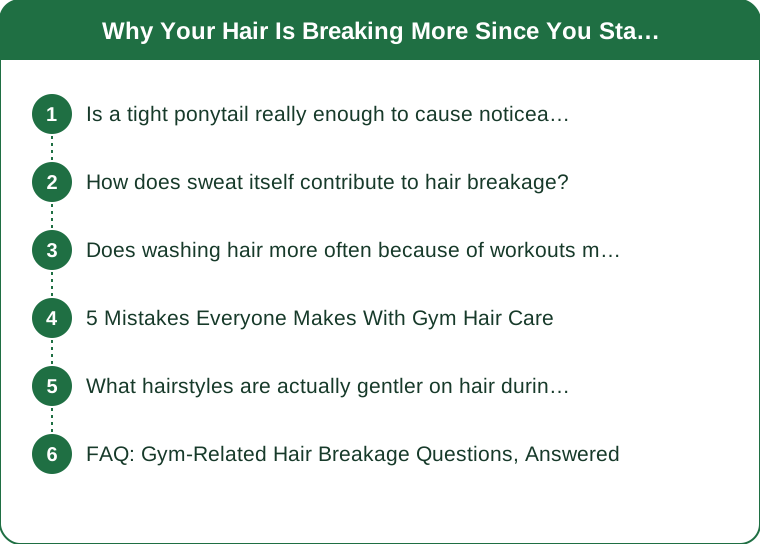
Why Training Breaks Hair
Repetition and tension: the the-the-same-tight-style-every-session (the identical tension in the same place repeatedly from the care-guide logic — the same-style-every-time), the the-tension-at-a-fixed-point (the the tie sitting at exactly the same spot each time from the braids logic — the fixed-tension-point), the the-friction-against-clothing-and-equipment (the hoods, collars and benches creating friction from the care-guide logic — the friction), the the-damp-hair-is-more-fragile (the wet or damp hair breaking far more easily from the care-guide logic — the damp-is-fragile), the the-frequency-multiplies-everything (the training several times weekly compounding all of it from the care-guide logic — the frequency-multiplies), and the reframe (the training-related breakage as coming from repetition rather than exercise — the same tight style at the same tension point, plus friction and damp handling).

Where It Actually Happens
The specific failure points: the the-at-the-hair-tie (the breakage concentrating exactly where the tie sits from the care-guide logic — the at-the-tie), the the-around-the-hairline (the tension pulling at the fine hairs at the hairline from the braids logic — the hairline), the the-at-the-nape-under-collars (the the nape rubbing against collars and hoods from the care-guide logic — the nape), the the-the-ends-from-dryness (the ends drying out from frequent washing from the how-often-wash logic — the dry-ends), the the-where-the-scalp-stays-sweaty (the sweat sitting on the scalp between washes from the sweat-scalp logic — the sweaty-scalp), the the-mid-length-from-friction (the mid-lengths abrading against clothing from the care-guide logic — the mid-lengths), and the the-when-taking-it-down-wet (the removing a tight style from damp hair from the care-guide logic — the taking-down-wet).
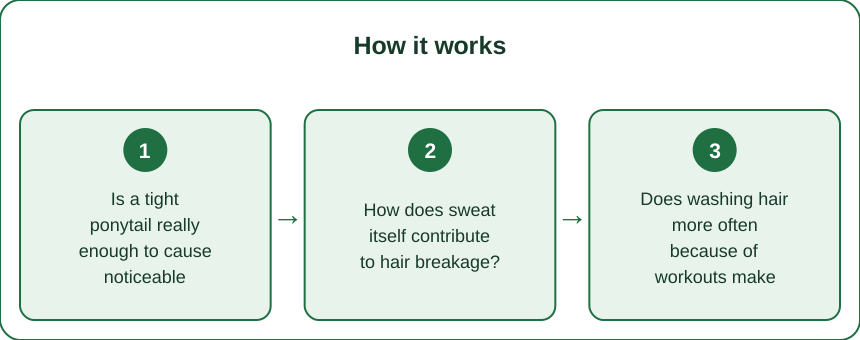
The Prevention Notes
Reducing the damage: the the-vary-where-you-tie-it (the changing the height of the tie between sessions from the care-guide logic — the vary-the-position), the the-looser-styles (the a looser style that still holds from the braids logic — the looser-styles), the the-snag-free-fabric-ties (the fabric or coil ties rather than elastic with metal from the care-guide logic — the snag-free-ties), the the-braids-for-longer-sessions (the braids distributing tension better than ponytails from the braids logic — the braids-distribute), the the-take-it-down-gently-and-dry (the letting hair dry before removing tight styles from the care-guide logic — the down-when-dry), the the-do-not-wash-every-single-session (the washing less often and rinsing instead from the how-often-wash logic — the wash-less-often), the the-treat-the-scalp-not-just-the-hair (the scalp care mattering alongside the lengths from the sweat-scalp logic — the treat-the-scalp), and the frame (the training hair breakage as preventable — varying tie position, looser snag-free styles, braids for longer sessions, taking it down dry and washing less often. Vary where you tie it, use looser snag-free ties or braids, take it down when dry, and wash less often than you think).
Hair breakage in people who train regularly rarely comes from the training itself — it comes from the tight ponytail worn in the same place daily, the friction of a hood, and taking the whole thing down while damp. Training breaks hair through the same tight style every session, tension at a fixed point, friction against clothing and equipment, damp hair being more fragile, and frequency multiplying everything. It happens at the hair tie, around the hairline, at the nape under collars, at the ends from dryness, where the scalp stays sweaty, in the mid-lengths from friction, and when taking it down wet. Prevent it by varying where you tie it, using looser styles and snag-free ties, braiding for longer sessions, taking it down gently and dry, washing less often, and treating the scalp.
Keep Reading
This article is for general informational and styling purposes only. Fit, sizing, and product availability may vary.