The Workout Week Protective Style Playbook
Quick Answer: For a five-day training week, box braids and twists are the top protective styles — they hold 2–6 weeks, survive sweat, and need no mid-workout fixing. Cornrows sit flattest under helmets and headbands; a low braided bun covers two or three days. Install on a rest day, wear a moisture-wicking headband, and dry your roots with cool air after every session.
Five sweat sessions a week. A wash day that eats three hours. Textured hair that does not consider chlorine, salt or a soaked scalp to be a personality-building experience.
The maths does not work, which is why so many people quietly cut workouts to protect their hair.
Protective styles are the treaty. Install once, train all week, keep the hair underneath intact.
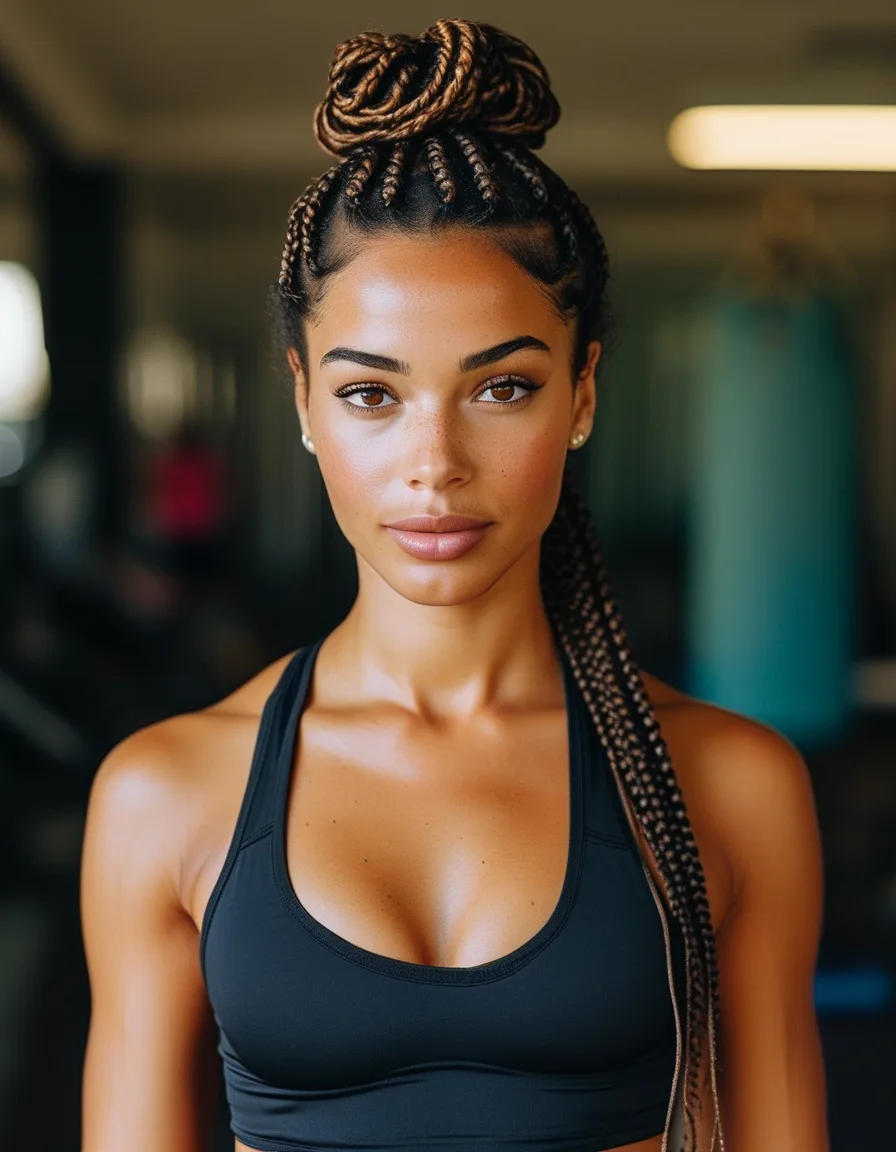
Which Protective Styles Hold Up Best for a Full Training Week?
Ranked by how much abuse they’ll absorb:
Box braids and twists — the training champions. Two to six weeks of wear, completely sweat-tolerant, and zero maintenance between sessions. If you train five or six days a week, this is the default answer. Knotless versions put less tension on the hairline, which matters when you’re also pulling hair back daily.
Cornrows — the flat-under-everything option. Unbeatable under a cycling helmet, a swim cap, a boxing headguard or a tight headband. Typically one to two weeks. The trade-off is that scalp access is limited, so cleansing takes more deliberate effort.
The low braided bun — the two-to-three-day installer. Ten minutes to put in, no appointment needed, keeps ends tucked and off your neck. Ideal for a lighter week or as a bridge between longer installs.
Wash-and-go — honorable, but sweat-fragile. It looks great and it does not survive Wednesday. Save it for rest days and low-intensity sessions.
Flat twists or a simple two-strand twist-out set sit in between: a few days of wear, quick to redo, gentler on hair that needs a break from tension.
How Do You Care for Your Scalp Under a Protective Style?
Protected hair still has a scalp doing cardio, and that’s where week-three problems start.
- Post-workout refresh: a diluted witch hazel or dedicated scalp spray on a cotton pad along the parts, right after training. It lifts sweat salt without soaking the style.
- Real cleansing on a schedule: every 7–10 days minimum, more if you’re training hard. A diluted clarifying shampoo applied with an applicator bottle straight to the parts, rinsed thoroughly, beats letting buildup announce itself.
- Moisture on the braid line: protective styles wick moisture away, so a light oil (jojoba, grapeseed) on the scalp two or three times a week keeps things from getting tight and flaky.
- Ends still count: the whole point is protecting them. A moisturising spray on the lengths a couple of times a week stops the style from quietly drying out the hair it’s protecting.
Protection without scalp care isn’t protection — it’s just hiding the problem for six weeks and then meeting it all at once.

What Nobody Tells You About Training With Protective Styles
Trapped damp is the real style-killer. Not sweat itself — sweat that never dried. Wrapping wet roots under a satin scarf and going to bed is how you get mildew smell and an itchy scalp by day four.
The locker-room dryer’s cool button exists for exactly this. Two minutes of cool air aimed at the roots after a session does more for style longevity than any product.
Tight is not the same as secure. If you got a headache from your install, that’s traction, and traction is how edges disappear. A style that’s slightly looser and redone a week sooner is the better long-term trade.
Chlorine goes after braids harder than sweat does. If you swim, wet the hair with clean water before getting in — saturated hair absorbs less pool water — and rinse immediately after.
Your hairline needs off-weeks. Back-to-back installs with no breather is the single most common route to thinning edges, and it happens gradually enough that you don’t notice until it’s noticeable.
How Should You Time Installs Around Your Training Schedule?
Treat the install like a training block — it has a start, a load and a deload.
Install on a rest day. Fresh braids plus a two-hour sweat session the same afternoon is asking a lot of brand-new parts. Give the style 24 hours before its first workout.
Match the style to the block. Heavy training phase or a race build? Long-wear braids. Deload week or light training? A looser twist-out or a bun is fine.
Wear a moisture-wicking headband along the hairline. It catches the worst of the sweat before it reaches the parts, and it costs about the price of a coffee.
Schedule the takedown before it’s overdue. Leaving braids in “just one more week” repeatedly is how matting at the roots happens, and takedown gets rough.
Build in breather weeks between installs — a week of low-tension styling lets the hairline recover. The style protects the hair; the schedule protects the style.
When to see a professional: widening parts, a receding hairline, persistent scalp pain or bumps that don’t resolve are worth a dermatologist or trichologist visit rather than another product. Traction alopecia is much easier to stop than to reverse.
How often should I wash my hair if I work out every day?
With a protective style in, cleanse the scalp every 7–10 days using an applicator bottle to reach the parts directly, and refresh with a scalp spray after each session in between. Daily full washing isn’t necessary and would wreck the style.
Can I keep braids in while swimming regularly?
Yes, with preparation. Saturate hair with clean water before entering the pool, wear a silicone cap if you can, and rinse thoroughly straight after. Add a chelating wash every couple of weeks to deal with chlorine buildup.
How long can I safely leave a protective style in?
Most box braids and twists sit comfortably at 4–6 weeks; cornrows at 1–2 weeks. Past that, new growth at the roots starts matting and takedown gets damaging. If the style is itching constantly or the parts have widened, it’s time regardless of the calendar.
TL;DR:
- Braids and twists for heavy weeks, cornrows under helmets and caps, low bun for two or three days.
- Refresh the scalp after every session; a real cleanse every 7–10 days.
- Dry roots with cool air — trapped damp kills styles faster than sweat.
- Keep tension humane. Headaches from an install mean your edges are paying.
- Install on a rest day, take it down on schedule, and leave breather weeks between.
- Wicking headband along the hairline: cheapest upgrade in the whole playbook.
Keep Reading
This article is for general informational and styling purposes only. Fit, sizing, and product availability may vary.